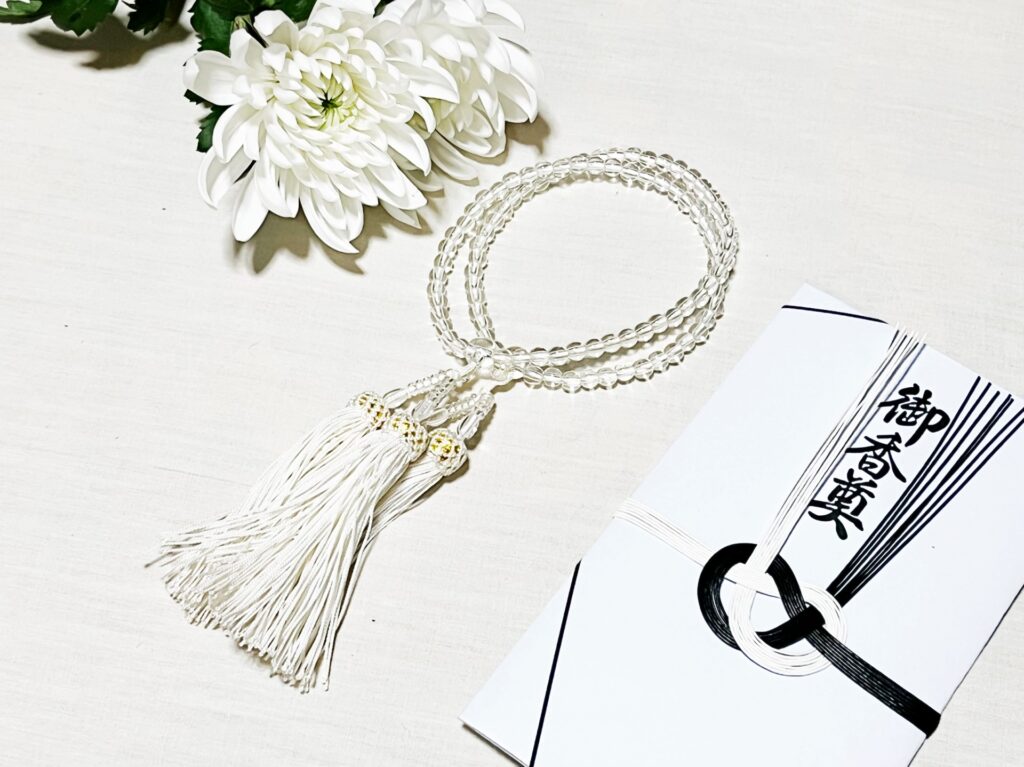
Hello! This is Goencha! When writing a condolence gift in memory of a loved one, whether it's a joint gift between a couple or parent and child, have you ever wondered if the way you write the envelope and inner envelope is correct? We'll explain all the important points you need to know, from the correct way to write a joint gift, to differences between religious sects, how to write the amount, and proper etiquette when handing it over. Let's clear up any questions you might have about condolence gifts so you can carefully convey your feelings for the deceased.
目次
Basic knowledge and preparation for condolence money
What is a condolence gift?
A condolence gift is a token of respect for the deceased, and is given to help ease the financial burden on the bereaved family. It is brought with you when attending a wake or funeral.
A condolence gift is a way of remembering the deceased and is meant to replace the offering of incense and flowers. This custom has been deeply rooted in Japanese society since ancient times, but the inscription and amount of the condolence gift may differ depending on the sect or religion.
Types of condolence envelopes and how to choose them
The envelope in which the condolence money is placed is called a "fukugi-bukuro," and the appropriate one is chosen depending on the religion or sect of the deceased and the amount of money being given.
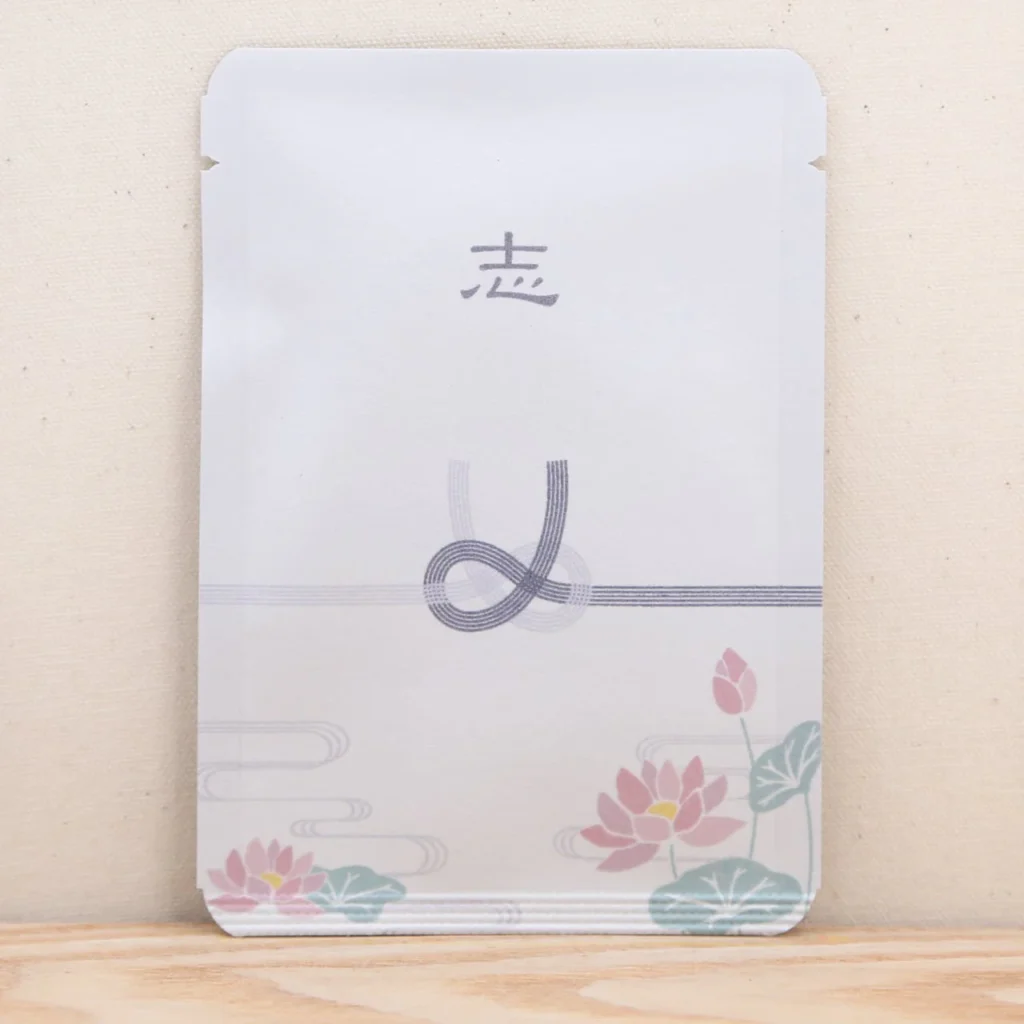
Mizuhiki strings should be "musubikiri" (tied strings) that cannot be untied once tied. Generally, black and white are used, but in some regions yellow and white Mizuhiki is also used. Also, condolence envelopes with lotus flowers on them are reserved for Buddhist ceremonies.
The main inscriptions and uses of condolence envelopes are as follows:
| Address | Main uses | remarks |
|---|---|---|
| before the spirit | Buddhist (49 days before death), Shinto, Christian | It can be used in many religions and sects, but in Jodo Shinshu, the term "Gobutsuzen" is used. |
| before the Buddha | Buddhist ceremony (49 days after death, or Jodo Shinshu) | It is used after the deceased has attained Buddhahood. |
| Imperial Jade Beads | Shinto | It will be used to cover the cost of offering sacred branches. |
| Flower offerings | Christian ceremony | It has the meaning of offering flowers. |
If the amount you are wrapping is small, choose one with printed mizuhiki, but if it is a large amount, choose one with real mizuhiki.
Why and how to use thin ink
It is common to use light ink on the envelope of a condolence gift. This is said to express deep sadness and dismay, such as "the ink has become diluted with tears of grief" or "it was so sudden that there was no time to rub the ink properly."
When writing with light ink, it is easy to use a commercially available brush pen for light ink. Do not apply too much pressure, and write carefully and with sincerity.
Basics of writing the envelope for condolence money
The inscription on the envelope is an important part of conveying your final feelings to the deceased. Here, we will explain how to choose the appropriate words according to the sect and how to write your own name.
Differences in inscriptions by sect
The appropriate words to write on the envelope of a condolence gift vary depending on the sect of the deceased and the bereaved family. If the sect of the deceased is unknown, it is common to write "Goreizen." This is said to be usable in all sects, including Buddhism, Shinto, and Christianity. However, in Buddhism, it is appropriate to use "Gobutsuzen" after the 49th day.
The main symbols for each sect are summarized in the following table:
| Sect | Address | remarks |
|---|---|---|
| Buddhism | before the spirit | Until the 49th day memorial service |
| before the Buddha | After the 49th day of Dharma teachings | |
| Shinto | Offerings to the gods | "Goreizan" can also be used |
| Christianity (Catholic) | Mass fee, flower fee | "Goreizan" can also be used |
| Christianity (Protestant) | Flowers and condolences | "Goreizan" can also be used |
| No religion or sect is known. | Condolence money in front of the deceased's soul |
Name writing and placement
On the envelope, write the recipient's name in block script under the mizuhiki cord. Use a brush or brush pen with light ink and make sure to center the name in full.
If you are wrapping a condolence gift in the name of multiple people, the way you write it will change slightly, so we will explain in detail.
The best tea gift for funerals is “Goencha from Kyoto Gyokuro”
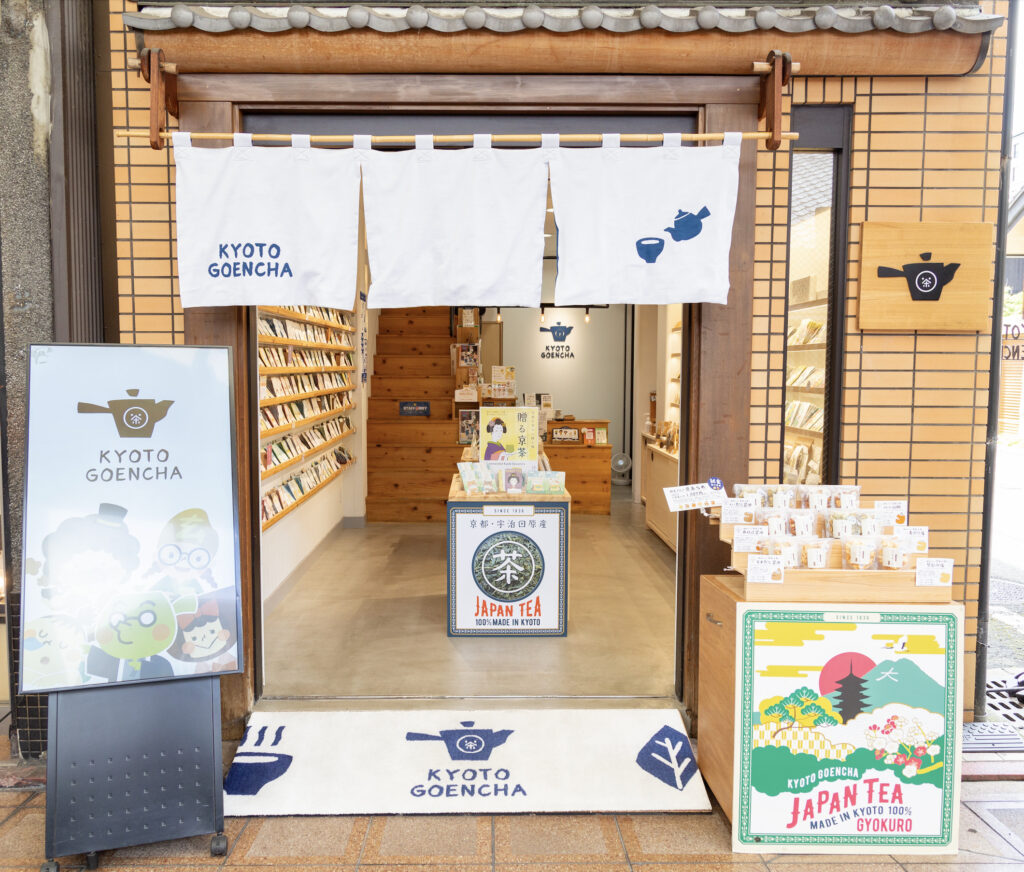
What is Kyoto Gyokuro’s Goen Tea?
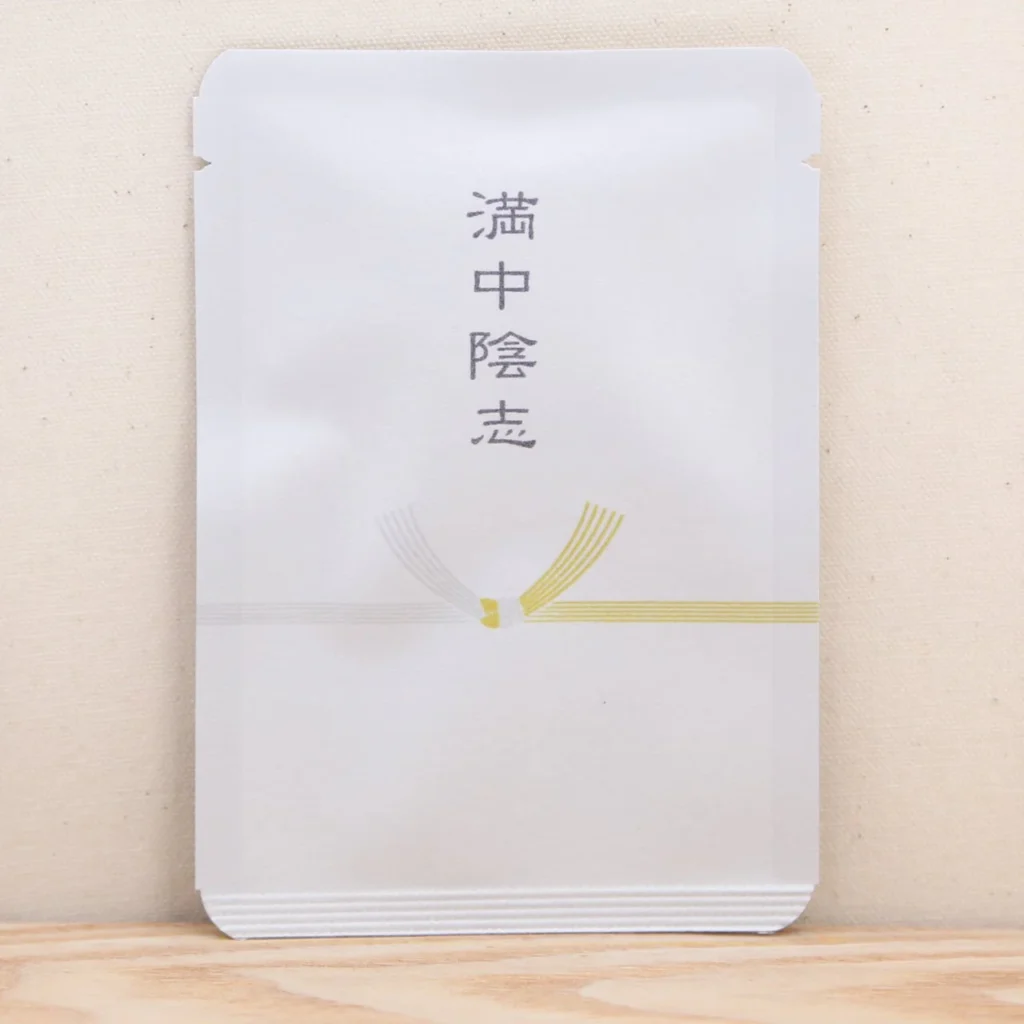
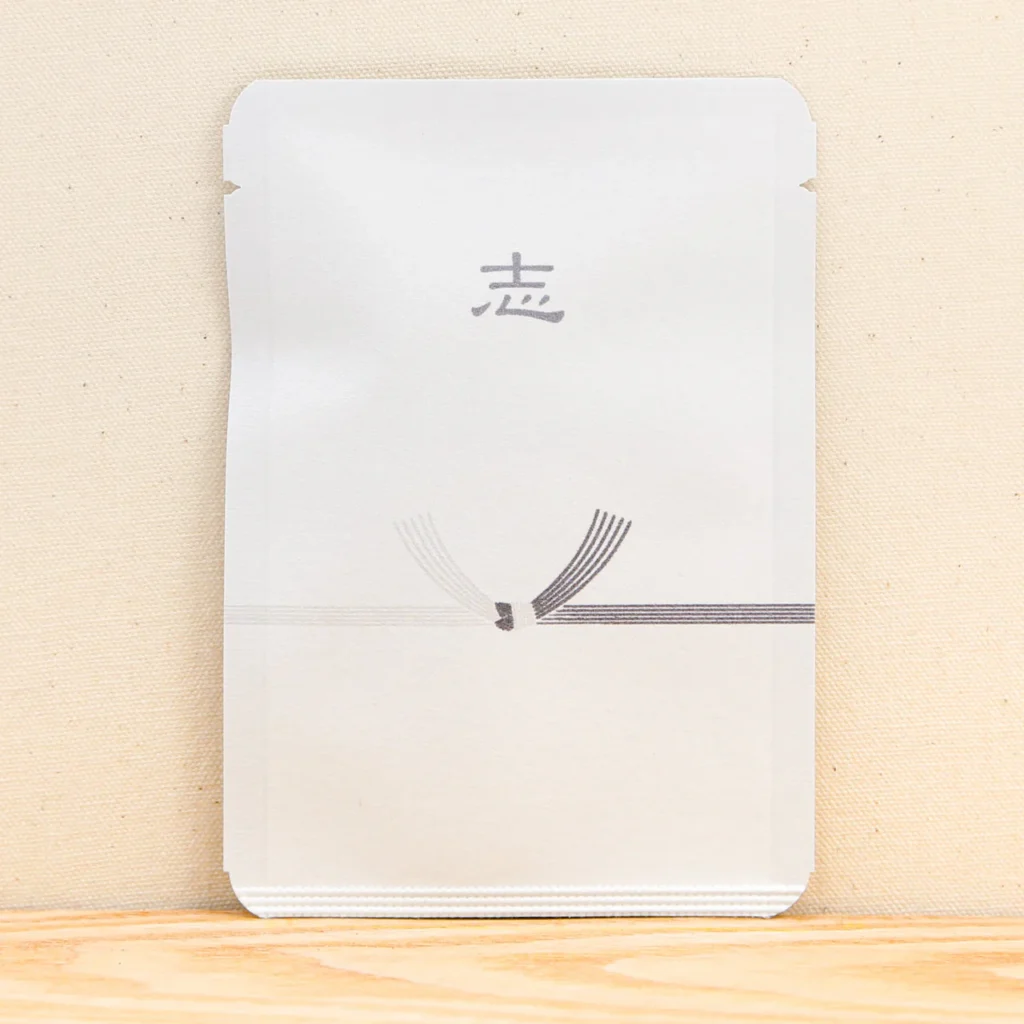
Kyoto Gyokuro's Goen Tea is a tea shop that delivers tea from Kyoto with the concept of "making tea more enjoyable." We aim to make high-quality tea more accessible to everyone, with content tailored to their needs.
We value the idea that "tea connects people," and we offer a wide range of products that are perfect for everyday tea time, as well as gifts for special people and corporate novelties. We especially recommend our products that can be personalized with original designs or names !
Why not express your feelings of "Thank you" and "I look forward to
working with you in the future" through tea?
Here are some recommended gifts that convey a message!
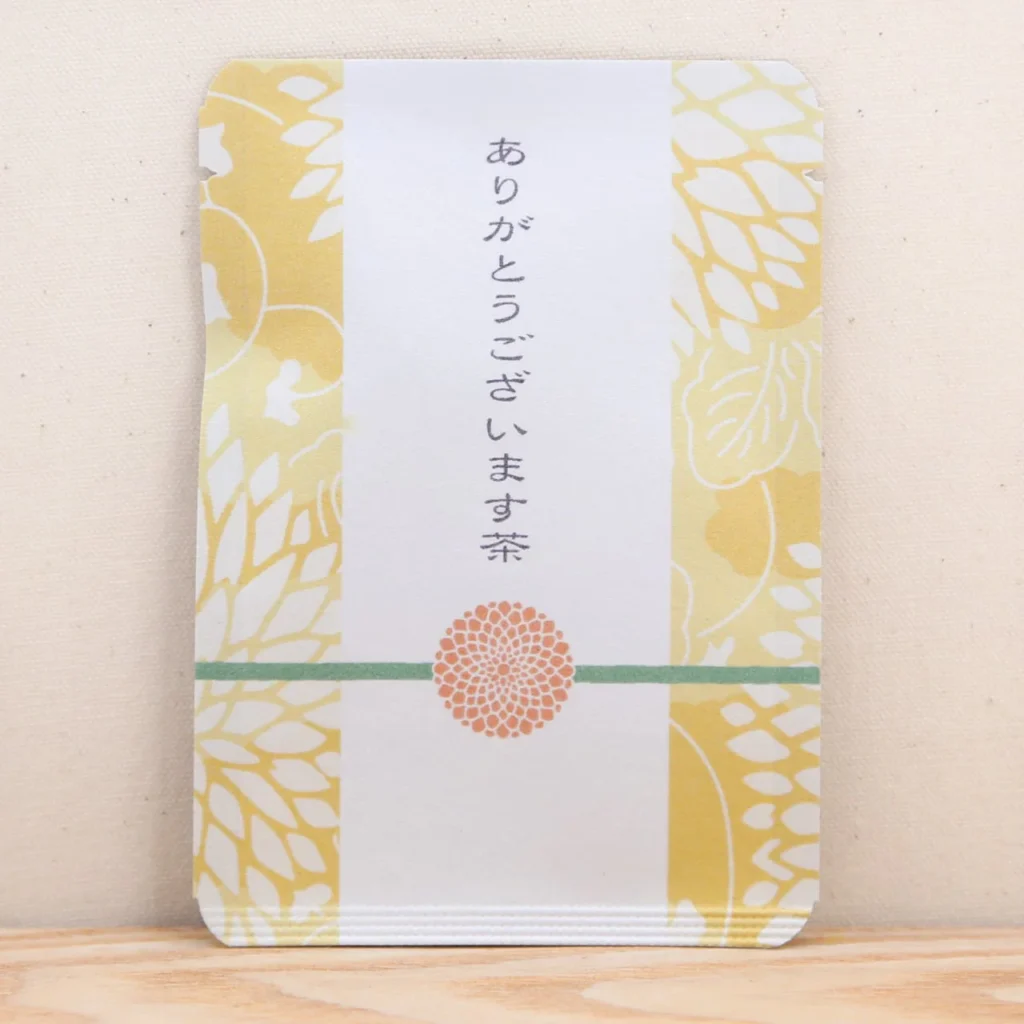
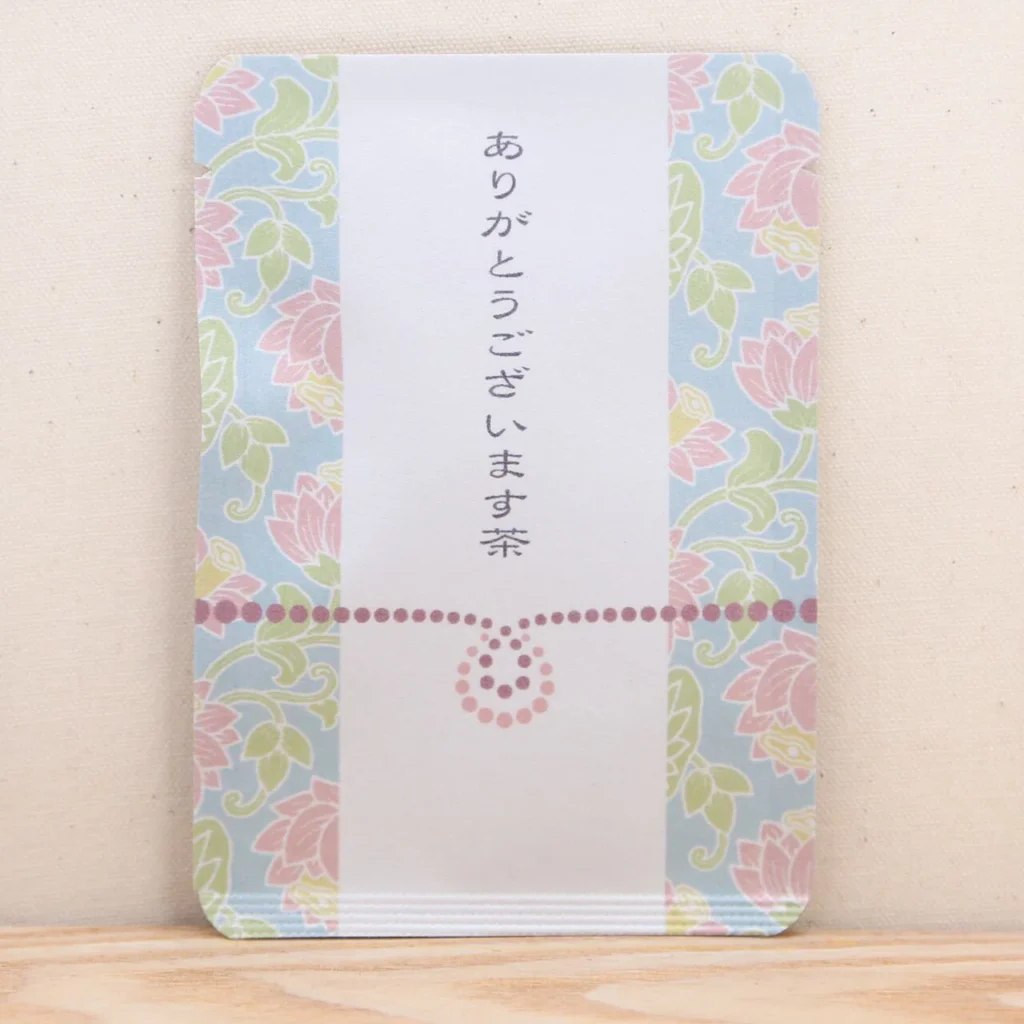
A special tea packed with feelings. Create a one-of-a-kind tea with an original greeting tea design. Custom order
For someone who loves tea...you can include it as a gift in return for a condolence donation, or since it's the size of a business card, you can put it in an envelope and send it.

How to write a condolence gift in the joint names of two people
We will explain how to write a condolence gift in the joint names of two people in specific cases. When writing a condolence gift in joint names, the way it is written will vary depending on the relationship with the deceased and the wishes of the representative. Be sure to know the correct way to write it for each situation and prepare it so as not to be rude.
How to write a condolence gift in the name of a married couple
When a married couple gives condolence money, it is common for it to be in their joint names, but the way it is written varies depending on their relationship to the deceased and the head of the household.
Generally, the name of the husband, who is the head of the household, is written in the center, and the wife's name is written to the left of it. It is customary for the wife's name to be written as just her first name, with the surname omitted.
It is rare for a married couple to each give a condolence gift, but if they are giving a condolence gift separately due to work-related reasons, each person will prepare a gift in their own name.
How to write a condolence gift in the name of both parents and children
When a parent and child write a condolence gift jointly, the way to write it will vary depending on the relationship. Generally, it is considered good manners to write the person of higher rank on the right side.
| Relationships | Example of a front inscription | remarks |
|---|---|---|
| Parent is the representative and jointly signs with the child | ○○ (parent's full name) △△ (child's name) | The parent's name should be written in the center and the child's name should be written to the left without the surname. |
| The child is the representative and signs jointly with the parent | ○○ (child's full name) △△ (parent's name) | The child's name should be written in the center and the parent's name should be written to the left without the surname. |
If the child is a minor and is dependent on the parent, it is common to list only the parent's name. If the child is an adult, the parent's name should be listed jointly as above.
How to write a condolence gift in the name of siblings
If siblings are writing a condolence gift jointly, their names should be written from right to left, starting with the oldest.
| Relationships | Example of a front inscription | remarks |
|---|---|---|
| Two brothers signed together | ○○ (older brother's full name) △△ (younger brother's name) | The older brother's name should be written in the center and the younger brother's name should be written on the left without a surname. |
| Two sisters signed together | ○○ (older sister's full name) △△ (younger sister's name) | The older sister's name should be written in the center and the younger sister's name should be written on the left without a last name. |
If everyone has the same last name, write the representative's full name in the center, and then write the names of the other siblings to the left of it without their last names.
How to write a condolence gift in the name of friends
When sending a condolence gift to friends in their joint names, the names are generally written from right to left, starting with the most senior. If there is no particular ranking, it is best to write them in alphabetical order.
| Relationships | Example of a front inscription | remarks |
|---|---|---|
| Two friends signed together (in order of seniority) | ○○ (Full name of superior) △△ (Name of subordinate) | The name of the person of higher rank should be written in the center, and the name of the person of lower rank should be written on the left without their last name. |
| Joint name of two friends (in alphabetical order) | ○○ (first person's full name in alphabetical order) △△ (next person's name) | Write your full name and the next name without the last name. |
When signing a joint name with friends, it is common for them to have different last names. In that case, write the full names of all the members. To keep the balance, write the representative's full name in the center, and then write the full names of the other friends slightly to the left.
How to write a condolence gift in the name of a company
If you are sending a condolence gift to a company representative, write the names of the people involved from right to left, starting with the person with the highest position. Don't forget to include the company name.
| Relationships | Example of a front inscription | remarks |
|---|---|---|
| Joint signature of the boss and two subordinates | Representative Director of XX Co., Ltd. △△ (Supervisor's full name) □□ (Subordinate's full name) | Write your company name on the far right, then your name and job title below it. |
| Jointly signed by two colleagues | ○○ Co., Ltd. △△ (full name) □□ (full name) | The company name should be on the far right, and if there is no job title below it, the name should be written. |
For best balance, write the company name and department name in smaller letters slightly to the right of the name. If there is a job title, write it above the name.
If there are many people in the joint name, you can write the representative's name and "and others," and then write the names and amounts of all the people on a separate sheet of paper and put it in the inner envelope. This is how to write it when there are three or more people in the joint name.
How to write a condolence gift in the names of three or more people
If three or more people are writing a condolence gift jointly, the writing style will be slightly different from when writing a condolence gift for two people. We will explain how to convey your feelings politely even when there are many people.
How to write the representative’s name and “and others”
When sending condolence money to three or more people, if it is not possible to write everyone's name on the envelope, or if there are many people to be included in the name of the person, the name of the representative and the notation "Hoka Ichido" (all others) are used. This is often used in relatively formal situations or when there are many people, such as among coworkers or groups of friends.
Here we have summarized the points to keep in mind when writing the representative's name and "and others."
| project | How to write | Points to note |
|---|---|---|
| Name of the address | Write the representative's full name in the bottom center. To the left of it, write "and others" in slightly smaller letters than the representative's name. | The representative is chosen from the most senior person or the person who will represent the group. |
| Inner bag (inner bag) | The inner envelope should contain the name and address of the representative and the total amount of the condolence money. | Be sure to enclose a separate sheet of paper listing the names of everyone involved to make it clear who the condolence money is from. |
| Preparation of attachments | On a piece of white paper, write the names of all those who have donated and the amount of each donation, and enclose it in the inner envelope. It is best to write the names in order of seniority or in alphabetical order. | By enclosing a separate document, you can reduce the burden on the bereaved family when sending condolence money in return. |
If you want to list all names
Even if three or more people are sending condolence money, if the number of people is relatively small (generally up to three people) or if the people are family members or close friends and have a close relationship with the deceased or the bereaved family, it is possible to include all of the names on the envelope. By including everyone's name, it becomes easier to convey each person's condolences.
Here are some tips for listing everyone's names:
| project | How to write | Points to note |
|---|---|---|
| Name of the address | Write the names of all the recipients in order from right to left at the bottom center of the condolence envelope. | It is common to write names from senior to senior. If the relationship is equal, it is fine to write them in alphabetical order. The size and balance of the letters in the name should be adjusted, and the name should be written carefully. |
| Inner bag (inner bag) | The inner envelope should contain the name and address of the representative and the total amount of the condolence money. Also, enclose a separate sheet listing the names of all the recipients and their respective amounts. | If you cannot fit everyone's names and amounts on the inner envelope, write the name of the representative and then write the details for everyone on a separate sheet of paper. |
How to write the inner envelope of a condolence gift
The inner envelope (uchibukuro) of the condolence money is the envelope that holds the money inside the condolence envelope. By writing the amount, address, and name on the inner envelope, it will be easier to record and manage at the reception desk. It is common to write on the inner envelope in regular black ink or a black ballpoint pen, rather than in light ink, to make it easier to read.
How to write amounts in Chinese numerals
The amount of money inside the envelope is written vertically on the front. It is considered good manners to use the old style (large characters) of Chinese numerals to prevent tampering. The amount begins with "金" (gold) and ends with "圓也" (yen ya). "也" indicates that there are no lower digits and marks the amount as fixed.
Here we will explain the old style (large characters) for amounts and how to write them.
| Calculation of numbers | Old font (large font) | Writing example |
|---|---|---|
| 1 | one | One thousand yen |
| 2 | 2 | Kinnikenenya (for 2,000 yen) |
| 3 | 参 | Kinsan-sen-en-ya (in the case of 3,000 yen) |
| 5 | Wu | Kingo-ken-en-ya (5,000 yen) |
| 10 | pickup | 10,000 yen (in the case of 10,000 yen) |
| 1,000 | footpath | Kinsan-sen-en-ya (in the case of 3,000 yen) |
| 10,000 | Ten thousand | 10,000 yen (in the case of 10,000 yen) |
| circle | round | Gold 10,000 yen |
For example, if you are wrapping 3,000 yen, you should write "kin san yen ya," if you are wrapping 5,000 yen, you should write "kin go yen ya," and if you are wrapping 10,000 yen, you should write "kin 10,000 yen ya."
How to write your address and name
On the back of the inner envelope, write your postal code, address, and name. This information is required when sending a condolence gift. Generally, this information is written vertically in the bottom left corner of the back.
- If you are sending a condolence gift alone,
please include the postal code, address, and name. - If the document is signed by a married couple
, write the husband's address, his full name in the name field, and then write only the wife's name to the left of it. - If the gift is in the name of multiple people, such as parents and children, siblings, or friends,
write the address of the representative listed on the outer envelope, and in the name column write the names of all the people in the same order as on the outer envelope. - If the gift is in the name of a company and is signed jointly (the representative's name and "others"),
only the representative's address and name should be written on the inner envelope. Separately, the names, addresses, and amount of the gift should be written on a piece of paper or similar paper by all the other parties involved and enclosed in the inner envelope.
Please write your address accurately, including the prefecture, street number, and building name, and write your name clearly and neatly.
Manners and points to note when giving a condolence gift
How to choose between new and old banknotes
It is common etiquette not to choose new bills to wrap condolence money in. This is because if you prepare new bills, it may be perceived as "anticipating misfortune." Be considerate of the feelings of the person giving the money and choose slightly worn bills.
If you only have new bills on hand, you can fold them once and then wrap them so you can hand them over without worry. It is important to avoid bills that are too torn or dirty, and to choose bills that are in good condition.
How to wrap and hand over a fukusa
The polite way to present a condolence gift is to wrap it in a fukusa (cloth). The fukusa protects the envelope from dirt and the mizuhiki string from falling apart. It also shows the thoughtfulness shown when presenting the gift.
How to choose a fukusa and its color
For funerals, choose calm, cool colors such as navy blue, green, gray, purple, etc. Purple fukusa is also convenient as it can be used for both celebrations and condolences.
How to wrap a fukusa
In the case of a funeral, the fukusa should be wrapped so that it opens to the left. The condolence envelope is placed in the center of the fukusa, and the cloth is layered on top of it from the right, bottom, top, and left to wrap it around. The left side coming last signifies grief.
When to take it out of the fukusa and how to hand it over
When handing it over at the reception, remove the condolence envelope from the fukusa. Use the fukusa as a stand and turn the envelope so that the inscription faces the recipient. Handing it over carefully with both hands will convey your feelings more clearly.
How to hand it over at the reception
Please be considerate to the bereaved family and try to behave calmly at the reception. Here we will explain the general flow and etiquette at the reception.
Signing the book and greetings
When you arrive at the reception, the first thing you do is sign in the guest book. Writing implements are usually provided. After signing, quietly offer a short message of condolence, such as "I offer my deepest condolences for your loss."
How to give a condolence gift
After expressing your condolences, take the condolence envelope out of the fukusa, turn it so that the recipient can read the inscription, and hand it to them with both hands. At this time, it will look more polite if you fold the fukusa and place the condolence envelope on top of it.
Receiving condolence money by sect
Some denominations, such as some Christian denominations, may prepare "flowers" or "Mass" fees instead of condolence money. Also, some denominations do not accept condolence money at all, so it is best to check beforehand.
Frequently asked questions about condolence money
We have compiled a list of frequently asked questions about giving condolence money. Please use this as a reference to ease any anxiety you may have.
| question | answer |
|---|---|
| What is the average amount of a condolence gift? | The amount of condolence money varies depending on your relationship with the deceased and your age. Generally, the closer the relationship or blood relationship, the more expensive the gift. It is important to give a reasonable amount according to your own situation. |
| If I attend both the wake and the funeral, do I give a condolence gift twice? | It is considered good manners to give a condolence gift only once, at either the wake or the funeral, the first time you attend. If you give it at both, it will be a double hassle for the bereaved family. |
| What should I do if a representative is giving the condolence money? | If a representative is handing over the condolence money, they should state at the reception, "I am here on behalf of (the name of the deceased), and my name is (the representative's name)." In the name section of the condolence envelope, it is common to write the name of the person who was originally supposed to attend, and then write "on behalf" in small letters in the bottom left corner. |
| I would like to decline the condolence gift, what should I do? | If you wish to decline the condolence money, you can write a note saying "I would like to decline the condolence money" in the inner envelope of the condolence envelope, or politely inform the reception desk. It is important to convey your desire to reduce the burden on the bereaved family. |
summary
Condolence money is an important gift that conveys gratitude and condolences for the deceased and heartfelt sympathy to the bereaved family. Writing a condolence gift can be tricky, especially when it's signed jointly by two people, or when it's signed by a spouse, parent and child, siblings, friends, or business associates. We've explained how to write the envelope and inner envelope for each situation, as well as etiquette for giving a condolence gift. The way condolence money is written and given requires careful consideration, including differences by religious sect and local customs. Each etiquette, from the reasons for using light ink, how to choose a condolence envelope, whether to use new or old bills, and how to wrap a fukusa (Japanese wrapping cloth), reflects respect for the deceased and their family. Use this as a reference when preparing your gift with care, ensuring your feelings of remembrance for your loved one are properly conveyed.