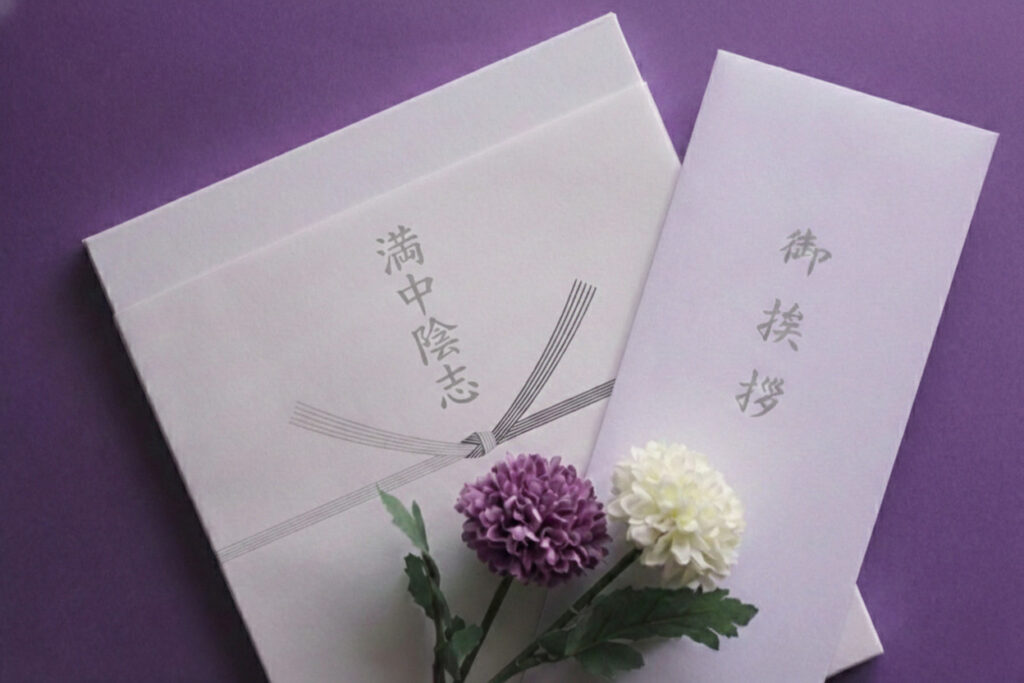
Hello! This is Goencha. When you hear the word "Manchuinshi," you might wonder how it differs from a condolence gift? What should you write on the envelope? You might be confused when preparing. Today, I'd like to explain the original meaning of Manchuinshi and how it's used differently from "Shi." Manchuinshi is a condolence gift used primarily in western Japan. I'll explain everything you need to know to prepare a heartfelt return gift, from the best time to send it, the average price, how to write the envelope, and sample greeting cards.

目次
What does the word Manjuinshi mean in the first place?
Some people may find the term "Manchuinshi" unfamiliar. In particular, it may be an unfamiliar word for people living outside the Kansai region. Here, we will explain the original meaning of the word "Manchuinshi" and its relationship to similar words.
The meaning of “Manchuin” in Manchuinshi
To understand Manchuinshi, let's first break it down into words. In Buddhism, the 49-day period after the death of a deceased person is called "Chuin." During this period, the soul of the deceased is said to be preparing to depart for the next world, and is judged in the underworld every seven days. The completion of this period on the 49th day is called "Manchuin," which has the same meaning as "the end of mourning." In other words, "Manchuinshi" refers to the "aspirations" (kokorozas), or gifts, given with gratitude for having safely completed this important milestone of 49 days.
The relationship between condolence money and Manjuinshi
Manchuinshi is a gift in return for the condolence money given at the wake or funeral, and has almost the same meaning as "Koden-gaeshi." It is given as a token of gratitude for the condolence money given and as a report that the 49th day memorial service was completed without incident. The term "Manchuinshi" is primarily used in western Japan, particularly in the Kansai region, while in Kanto and other regions it is generally called "Koden-gaeshi." Despite the difference in name, both are important gifts that convey gratitude to those who remembered the deceased.
| How to call | Main Meaning | Areas where it is often used |
|---|---|---|
| Manzhong Yinzhi | A gift in return for a condolence gift given at the end of the 49th day of mourning | Kansai and other western Japan |
| Condolence gift | General return gifts for condolence money received | Nationwide |
Differences in the inscriptions of Manjuinshi and Shi
When giving a condolence gift, it can be difficult to decide what to write on the noshi paper. "Manchuinshi" and "shi" each have different meanings and are used in different situations. Here we will explain the differences between them. By knowing the meaning of each, you can convey your gratitude more politely.
Situations and regions where Manjuinshi is used
"Manchuinshi" is an inscription used on Buddhist condolence gifts. In Buddhism, the 49 days after the death of a deceased person are called "chuin." The completion of this period and the end of mourning is called "Manchuin," and a "Manchuinshi" is a gift that expresses gratitude and reports that the deceased has safely attained enlightenment. This inscription is customarily used mainly in the Kansai region and western Japan.
Situations in which “Shi” is used and religion
"Kokorozashi" (Aspirations) is a highly versatile inscription that can be used nationwide, regardless of religion or sect. It can be used for Buddhist, Shinto, and Christian ceremonies as well as for condolence gifts. It can also be used for general gifts that express gratitude at funerals, such as gifts for memorial services, so it's a great inscription to use when you're unsure which inscription to use.
How to use the appropriate envelope depending on the occasion
Let's take a look at which address to choose and how it differs depending on religion and region. By adapting to the recipient's customs, you can make your gift appear more heartfelt.
| Address | Religion/Sect | When to use | Main areas |
|---|---|---|---|
| Manzhong Yinzhi | Buddhist | A gift in return for a condolence gift given at the end of the 49th day of mourning | Kansai and Western Japan |
| Zhi | General (Buddhist, Shinto, Christian, etc.) | General funeral matters such as gifts in return for condolence money and gifts for memorial services | Nationwide |
| Memorial grass | Shinto and Christian ceremonies | Gifts in return for condolence money such as for the 50th day memorial service | Nationwide |
| Cha no Ko | Buddhist | Condolence gifts, memorial service gifts | Parts of Chugoku, Shikoku and Kyushu |
In Shinto ceremonies, "shinobigusa" (remembrance grass) is often used, and in Christian ceremonies, there is no set inscription, but "shi" or "shiobigusa" are sometimes used. If you are unsure which inscription to use, it is safe and not rude to choose "shi", which is not restricted to any religion or region.
When to give Manjuinshi and the average amount
When preparing a Manjuinshi gift, you may be wondering when and how much to give. Here we will explain when to give a Manjuinshi gift and how to think about the amount.
The best time to give gifts is after the 49th day memorial service.
Manjuinshi gifts are sent after the 49th day memorial service, which is the 49th day since the death of the deceased, and also to announce that the mourning period has ended. For this reason, the timing of sending them is generally after the 49th day memorial service. Specifically, it is safest to arrange for the gift to be delivered to the recipient within one month after the memorial service.
When giving a gift, it is polite to include a greeting card expressing gratitude and informing the recipient that the memorial service was completed successfully.
Recently, more and more people are choosing to hand over a gift on the day of the funeral or memorial service, a method known as "same-day return," out of consideration for attendees from far away and to reduce the burden of making arrangements later. In the case of same-day return, since the amount of the condolence money received is not checked before selecting a gift, it seems common to prepare a flat-rate gift of around 2,000 to 3,000 yen. If the condolence money received is large and the prepared gift is insufficient, it is considered good manners to send a gift worth the difference as a Manjuinshi gift at a later date.
The going rate is half to one-third of the amount.
The basic value of gifts given as Manjuinshi is to return about half of the amount of the condolence money received, which is called "half return." In some cases, it is acceptable to return about one-third of the amount. For example, if you receive a condolence money of 10,000 yen, one guideline is to choose a gift worth about 3,000 to 5,000 yen.
In particular, when you receive a large amount of condolence money from relatives, it may be expressed as a desire to support the bereaved family's lifestyle. In such cases, it is not rude to give a return gift of about one-third of the amount, rather than being too concerned about the market price. Similarly, if the breadwinner of the family has passed away, it is acceptable to decide on a reasonable amount to give in return. The important thing is to convey your gratitude.
The table below shows the approximate amount of return gifts depending on the amount donated, so please use it as a reference when choosing a gift.
| The amount of the condolence money received | Estimated value of return gift (one-third to one-half) |
|---|---|
| 5,000 yen | 1,500 yen to 2,500 yen |
| 10,000 yen | 3,000 to 5,000 yen |
| 30,000 yen | 10,000 to 15,000 yen |
| 50,000 yen | 15,000 to 25,000 yen |
Generally, if you receive offerings or flowers, it is not necessary to give a gift in return. However, if you receive something expensive, or if it is from someone who was unable to attend the funeral, it would be more polite to give a gift in return depending on the situation.
How to choose gifts to give as Manjuinshi gifts
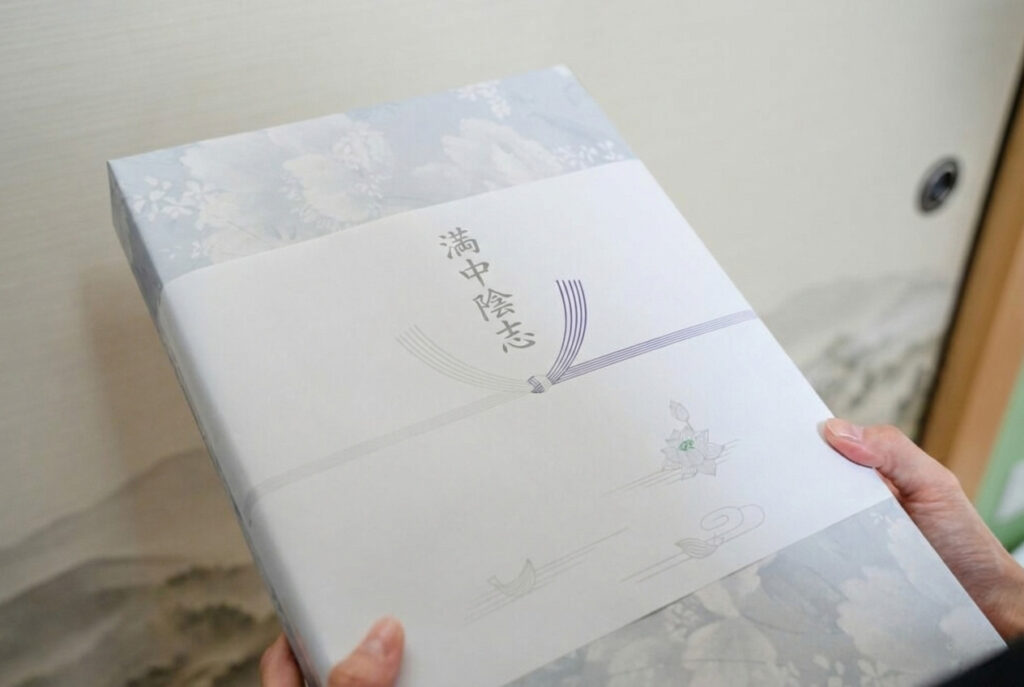
Choosing a gift for the Manjuinshi ceremony is an important opportunity to remember the deceased and express gratitude to those who showed their support. When choosing a gift, it is common to give "disappearing items" that disappear once eaten or used, based on the idea of "not leaving behind any unfortunate feelings." Here, we will look at what kind of gifts are appreciated and what kind of gifts should be avoided.
A popular gift for Manjuinshi
For Manjuinshi, it is best to choose something practical that can be used in daily life. Choosing a gift while keeping in mind the recipient's preferences and family structure will help convey your feelings more clearly.
- Food items
: Tea, coffee, seaweed, and long-lasting sweets are standard items. A set of condiments that can be used at the dinner table every day is also appreciated. Choosing sweets that the deceased enjoyed while alive is also a thoughtful gift that will help you remember the deceased. - Soap
, detergent, and bath salts are popular gifts, as they represent the idea of "washing away sadness." High-quality towels are also popular, as they also represent the idea of "wiping away sadness." Simple designs that are easy for anyone to use are ideal. - Catalog gifts
are useful when you don't know the recipient's preferences or when you want them to choose something they like. Catalog gifts are available in a variety of price ranges to match the amount of condolence money received, so in recent years they have become a popular gift for the Manjuinshi ceremony. Catalog gifts include meat and fish, which are usually avoided, but this is not a problem as long as the recipient chooses what they like.
Items to avoid as a matter of etiquette
In order to convey gratitude, it is considered good manners to avoid items that are considered inappropriate as gifts for funerals, as these are associated with Buddhist teachings and celebrations.
| Examples of items to avoid | The reason |
|---|---|
| Raw foods such as meat and fish | This is because they are "four-legged, fishy creatures" that are reminiscent of killing, which is forbidden in Buddhism. |
| Dried bonito flakes and kelp | This is because it is often used for celebrations such as wedding favors and is reminiscent of the word "joy." |
| Alcohol | It is often drunk at celebratory occasions and is generally considered best avoided as it evokes happy occasions. |
| Gift certificates and vouchers | This can be considered rude, especially when giving to someone of higher rank, as the amount of the gift will be directly apparent. |
These items are generally considered to be best avoided, but this rule does not apply if you are giving them to someone close to the deceased, such as if they particularly liked alcohol. Above all, try to choose an item that shows your feelings for the person.
Recommended for the Manchuinshi ceremony... Kyoto Gyokuro's Goen Tea is a great gift for funerals」
What is Kyoto Gyokuro’s Goen Tea?
Kyoto Gyokuro's Goen Tea is a tea shop that delivers tea from Kyoto with the concept of "making tea more enjoyable." We aim to make high-quality tea more accessible to everyone, with content tailored to their needs.
We value the idea of "tea connecting people," and we offer a wide range of products that are perfect for everyday tea time, as well as gifts for special people and various novelties. We especially recommend our products that can be personalized with original designs or names !
Why not express your feelings of "May your wish come true" or "
May you find a good match" through tea?
Here are some recommended gifts that convey a message!
A special tea packed with feelings. Create a one-of-a-kind tea with an original greeting tea design. Custom order
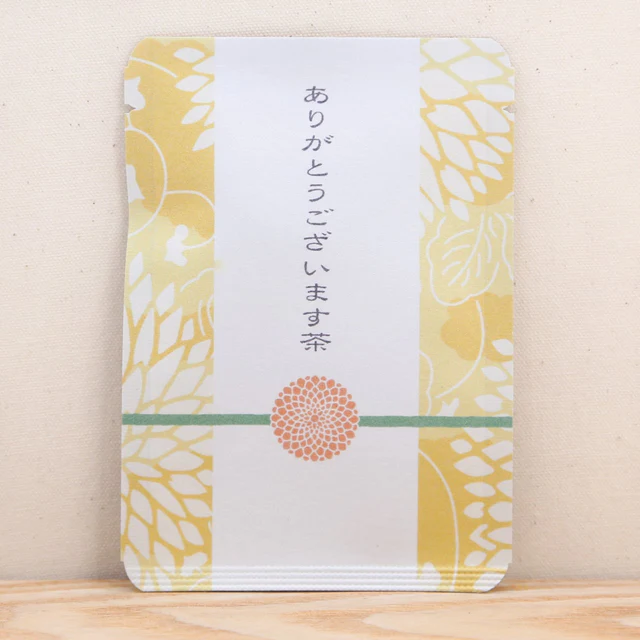
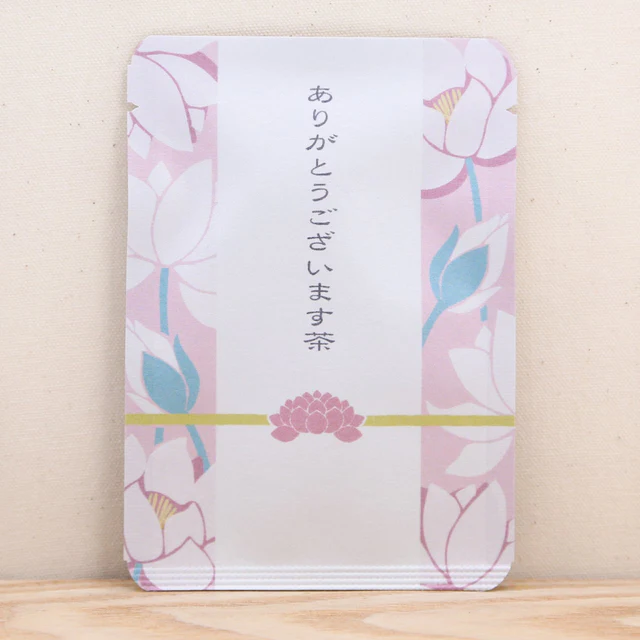
For someone who loves tea...you can include it as a gift in return for a condolence donation, or since it's the size of a business card, you can put it in an envelope and send it.

A thorough explanation of how to write a Manjuinshi noshi
In order to properly convey your feelings, it is polite to wrap gifts for the Manjuinshi ceremony with a noshi (wrapping paper). Here, we will explain the types of noshi paper and how to write the address, as well as other points you should know when preparing.
Types of Noshi Paper and How to Choose Mizuhiki
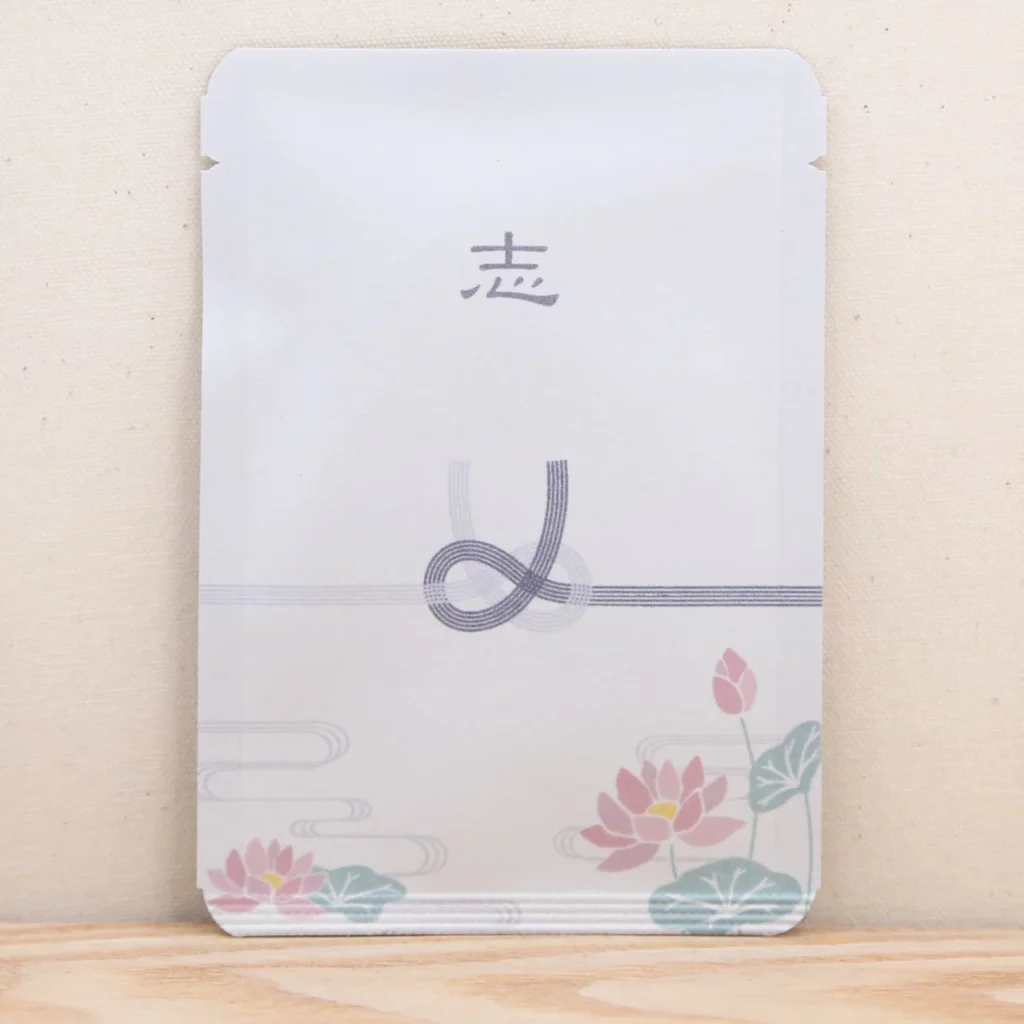
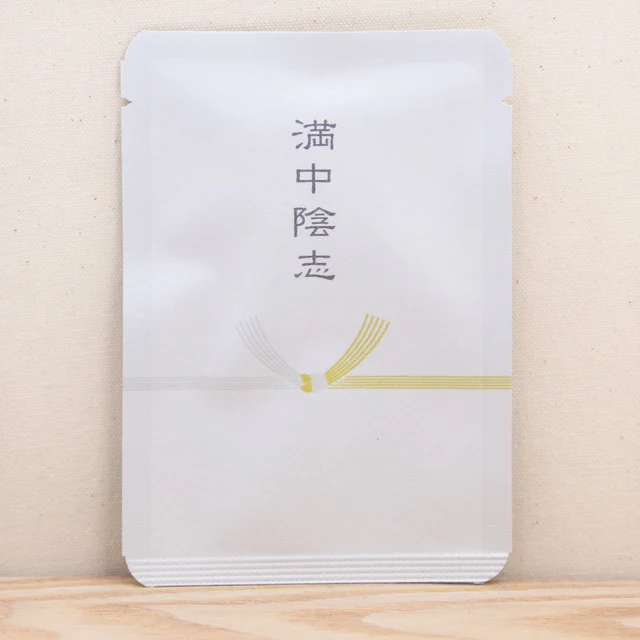
The wrapping paper used for Manjuinshi is a mourning wrapping paper that is generally used for condolences. Choose one that does not have the noshi (gift wrapping) that is used for celebrations. For mizuhiki, use a knotted string that carries the meaning of "never repeating." Customs regarding the color of mizuhiki vary by region, but the most common colors are listed in the table below.
| Mizuhiki color | Main regions and religions |
|---|---|
| Black and white knot | This is the most common type used nationwide. In Buddhist ceremonies, ones with lotus flowers painted on them are also used, but in Shinto and Christian ceremonies, ones without lotus flowers are chosen. |
| Yellow and white knotted | It is mainly used in the Kansai and Hokuriku regions. |
| Double Silver Musubi | Like black and white mizuhiki, it is used throughout the country and is mainly used as a return gift in response to a large amount of condolence money of over 50,000 yen. |
How to write the top line of the envelope
The top line of the mizuhiki is where you write the "Obokeki" (front letter) which indicates the purpose of the gift. In Buddhism, it is common to write "Manchuinshi" (end of the year). In some areas, such as the Kanto region, it is often written as "Shi" (sentiment), which can be used regardless of religion, so it is a good choice when you are unsure. The text is generally written with a brush or brush pen in thick ink, as it also serves as a notice that the 49th day memorial service has ended and the mourning period has ended. However, depending on the region and the family's beliefs, thin ink may also be used.
How to write the name on the bottom of the envelope
The name of the giver should be written on the bottom line of the mizuhiki in slightly smaller letters than the top line. Generally, it is written with just the family name of the chief mourner, or as "XX family." It is also acceptable to write the full name of the chief mourner.
When sending a gift in joint names
If there are multiple chief mourners, such as siblings, their names should be written jointly. In this case, the full names should be written in order of seniority (oldest) from the right. It is common to have up to three people, but if there are more than that, it is easier to summarize it as "The whole XX family" or "All the children" instead of writing everyone's name.
Preparing a greeting card to accompany the Manjuinshi
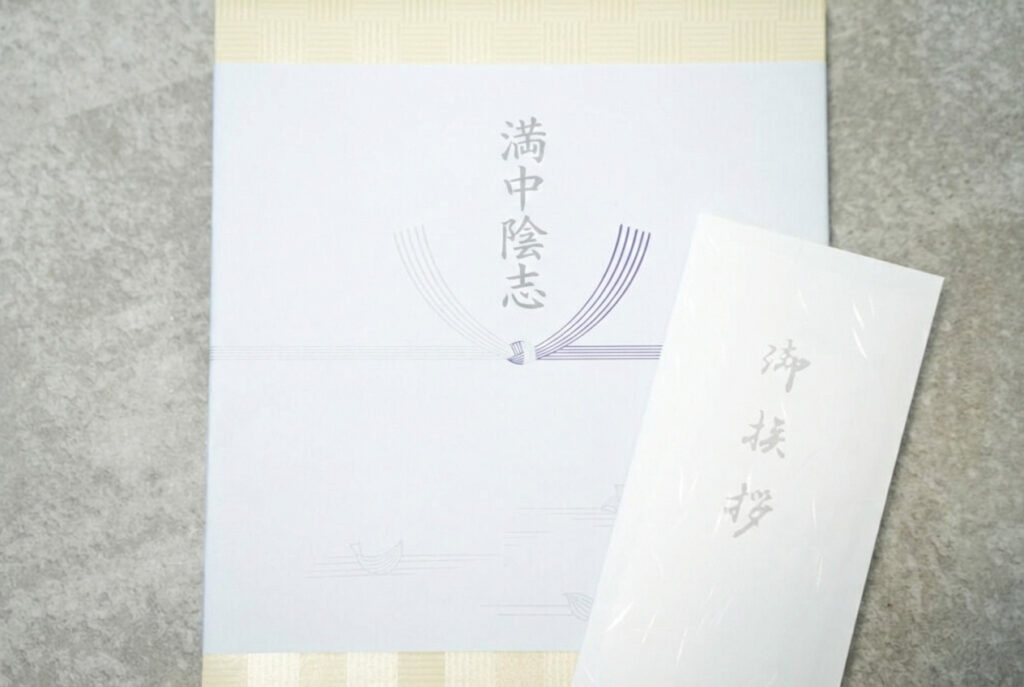
It is polite etiquette to include a thank-you letter with the Manjuinshi gift to express gratitude and to inform the deceased that the 49th day memorial service has been completed successfully. Here we will introduce some points to keep in mind when preparing a thank-you letter, as well as some examples that can be used as is. Prepare a letter that also conveys your apology for being rude and rude in writing, even though you would normally visit the deceased in person to express your gratitude.
What should be included in the letter of greeting?
A letter of thanks is an important document that expresses gratitude for the condolence money received and reports that the memorial service has been completed without any problems. Traditionally, it is customary not to use punctuation marks (such as "," or ".") in letters related to condolences. This is said to be a wish that the memorial service will proceed smoothly without any problems. Seasonal greetings are also not necessary.
The basic information to include in a greeting card is as follows:
| project | Key points of the contents |
|---|---|
| Salutation and Conclusion | Choose polite words and use them together, such as "Dear" and "Sincerely yours," or "Respectfully yours" and "Sincerely yours." |
| Words of thanks | Express gratitude for the care given to the deceased during their lifetime, and thank those who attended the funeral and gave condolence money. |
| Memorial service report | We are pleased to report that the 49th day (full mourning) memorial service was successfully completed. |
| About Manjuinshi | As a token of gratitude, you will send a gift in return (Manchuinshi). |
| Closing remarks | Include an apology for expressing your gratitude in writing, when you should have met in person to express your gratitude. |
| date | Write "Reiwa year month" as the date the memorial service was held or the date of shipping. |
| Sender name | It is common to write the name of the chief mourner and then write "all relatives" next to it. |
Ready-to-use greeting letter examples
The words used vary depending on the religion or sect, so we will provide examples for each situation. You can also add a sentence in your own words to express your feelings of remembrance for the deceased or your gratitude to them to make a heartfelt greeting.
Buddhist style (general examples)
Dear
Sir/Madam, Upon the recent passing of my late father, Mr. (Name), we would like to express our sincere gratitude for your kind condolences and generous donations, despite your busy schedule.
Thanks to you, we were able to hold the 49th day memorial service without any problems.
As a token of our condolences, we would like to send you a small gift, which we hope you will accept.
While we would normally bow and express our gratitude, we would like to express our gratitude to you through this letter.
Sincerely
yours, XX/XX/Reiwa
XX XX (Name of Chief Mourner)
All relatives
Examples of Shinto and Christian weddings
Shinto and Christian ceremonies do not use Buddhist terms such as "manchuin," "49th day," "memorial service," or "kuyo." Shinto ceremonies use terms such as "50th day memorial service," while Christian ceremonies use terms such as "memorial mass" for Catholics and "memorial service" for Protestants.
[Example of Shinto ceremony]
Dear
Sir/Madam, Recently, at the time of my father (name),'s passing, you kindly offered your kind condolences and generous offerings despite your busy schedule. We are extremely grateful for this.
Thanks to you, we were able to hold the 50th day memorial service without any problems.
We would be grateful if you would accept
this small token of our remembrance. While we would normally bow and express our gratitude, we would like to express our gratitude to you in writing.
Respectfully
, Reiwa Year XX
XX XX (Name of Chief Mourner)
[Christian style example]
Dear
Father, We would like to express our sincere gratitude for attending the funeral despite your busy schedule and for the kind donation of flowers when our father passed away. Thanks to you, we
were able to hold the memorial mass (or memorial service) without any problems. We
would be grateful if you would accept this small token of our appreciation.
While we would normally express our gratitude in person, we would like to express our gratitude to you here in writing. Sincerely yours, Reiwa Year XX Month XX XX (Name of Chief Mourner)
ーーーーーーーーーーーーーーーーーーーーーーーーーーーーーーーーーーーーーーーーーーー
Using the examples introduced here as a reference, please choose a letter that best suits your feelings, while being mindful of expressions that convey your memories of the deceased and your sincere condolences.
summary
Manjuinshi is a gift in return for condolence money, informing the deceased that they have safely reached the 49th day since their death and conveying gratitude to those who cared for them during their lifetime. This type of envelope is primarily used in western Japan, but depending on the region, religion, or sect, it may be more common to write "shi."
We have introduced the different uses for each occasion, how to write a noshi, and sample greeting cards, but while there may be regional differences, the most important thing is to carefully convey your thoughts of remembrance for the deceased and your gratitude for the kindness shown to you up until now. Please use this as a reference for putting your thoughtfulness into words and conveying your feelings.ましたが、地域による違いはあっても、もっとも大切なのは、故人を偲ぶ想いと、これまでのご厚意への感謝を丁寧に届けることです。心遣いを形にして、想いを伝える参考にしてみてください。