Hello! This is Goencha. When you suddenly receive news of a death, you may wonder which condolence envelope to choose without seeming rude. If you're unsure whether "Goreizen" is appropriate, simply choose "Goreizen" and you'll have no worries in most situations. This time, I'll go into more detail and explain the difference between "Goreizen" and "Gobutsuzen," how to choose one based on your religion, the type of condolence envelope to choose based on the amount you're wrapping, and etiquette, such as how to write the envelope and how to put the money inside. I hope I can help you convey your feelings of mourning for the deceased in a straightforward manner.
It's a great little gift to accompany a condolence gift!
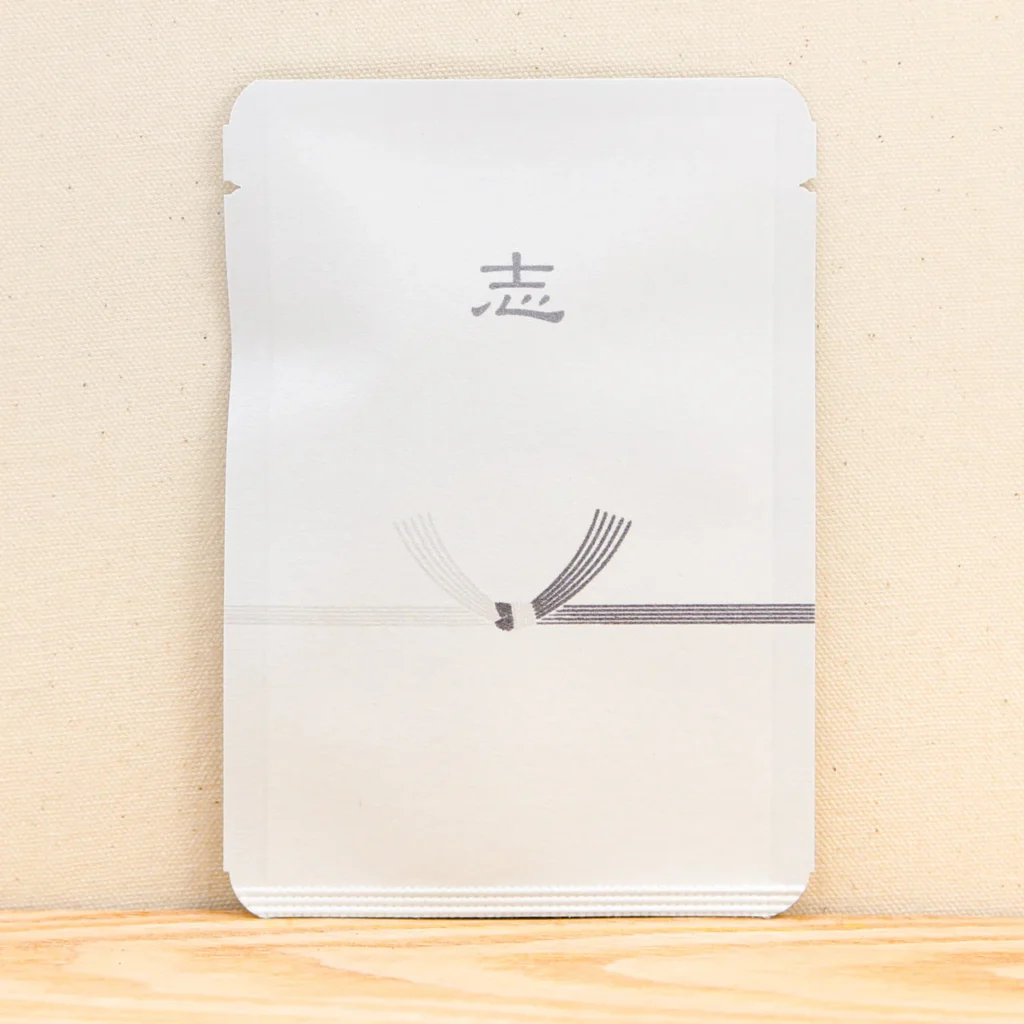
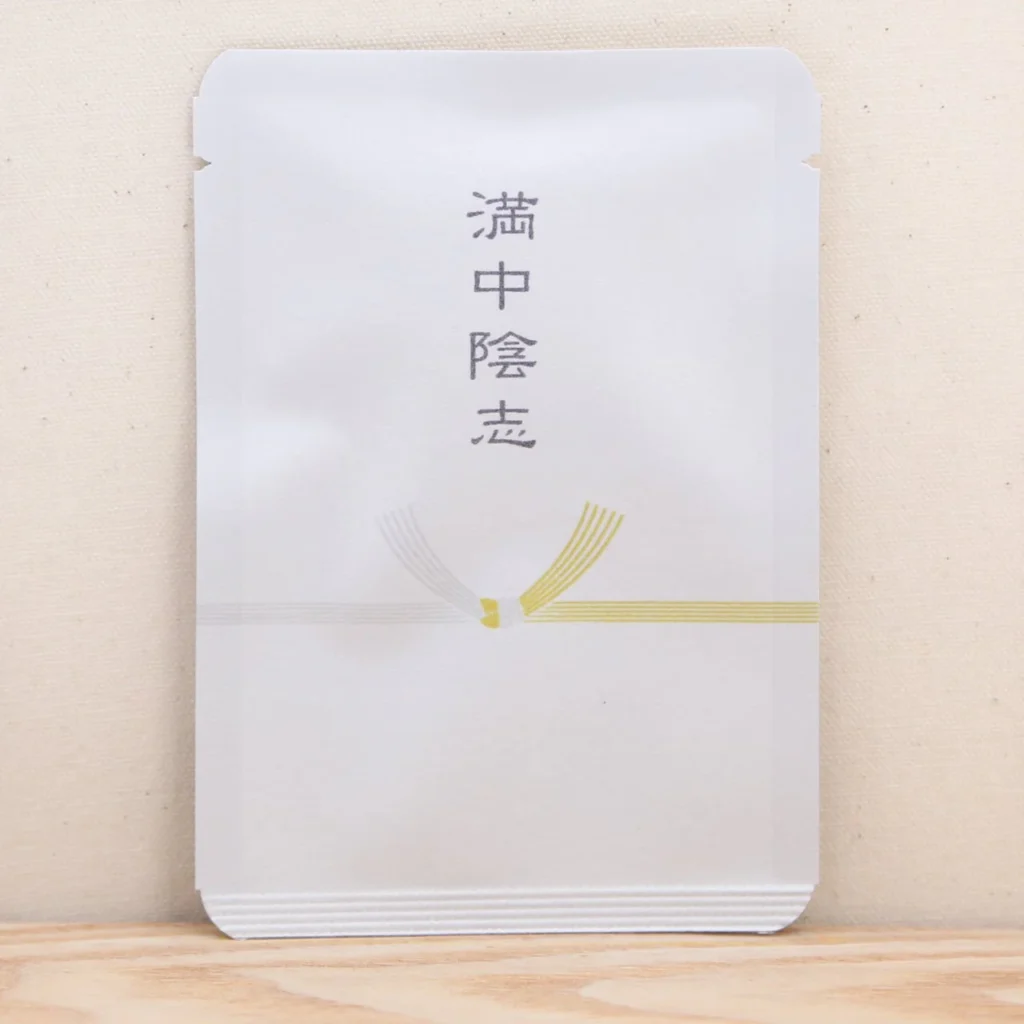

Table of Contents
When to use a condolence envelope in front of the deceased’s spirit
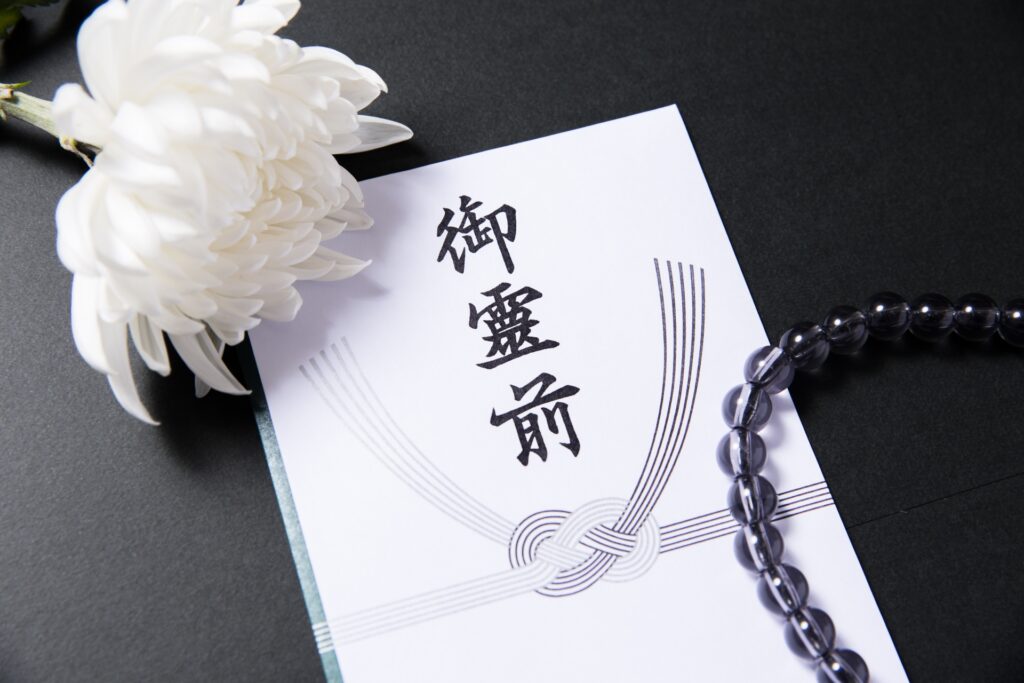
When news of a sudden death hits, we want to express our condolences properly, but it's not uncommon to be unsure of which condolence envelope to choose. Condolence envelopes with the words "Goreizen" (present in front of the deceased's spirit) written on them are particularly common, but in what situations is it appropriate to use them? Here, we'll explain the situations in which "Goreizen" condolence envelopes are used, so you don't have to panic in an emergency.
“Gorei-mae” is an inscription that can be used in many situations
If you are unsure what to write on the envelope, it is best to choose "Goreizan" (present to the spirit of the deceased) first, as this is less likely to be considered rude. This is because "Goreizan" is a widely applicable term, even when you do not know the religion or sect of the deceased. It can be used not only in Buddhism, but also in Shinto and Christianity.
However, there are exceptions within Buddhism, such as Jodo Shinshu, so caution is required. Let's take a look at the differences between religions and how to use them.
Main inscriptions used at wakes and funerals
Generally, "Goreizan" is used at wakes, funerals, and memorial services. In Buddhism, the soul of the deceased is believed to attain enlightenment and become a "Buddha" after 49 days, and before that, it is treated as a "spirit." Therefore, "Goreizan" is considered appropriate until the 49th day.
The differences from other notations are summarized in the table below.
| Address | Major religions and sects | Main situations in which it is used |
|---|---|---|
| before the spirit | Buddhist ceremonies in general, Shinto ceremonies, Christian ceremonies | Wake, funeral and farewell ceremony (up to 49 days before the Buddhist funeral) |
| before the Buddha | Buddhist (excluding Jodo Shinshu, etc.) | The Dharma teachings of the 49th day onwards |
| Imperial Jade Bead Material (Imperial Sakaki Material) | Shinto | Wake and funeral service (farewell ceremony) |
| Flower offerings | Christian ceremony | Wake, funeral, memorial service, mass |
As you can see, different inscriptions need to be used depending on the religion and the time period. We will look at the differences between them and how to choose them in the next chapter.
The difference between “Goreimae” and “Gobutsumae” is important
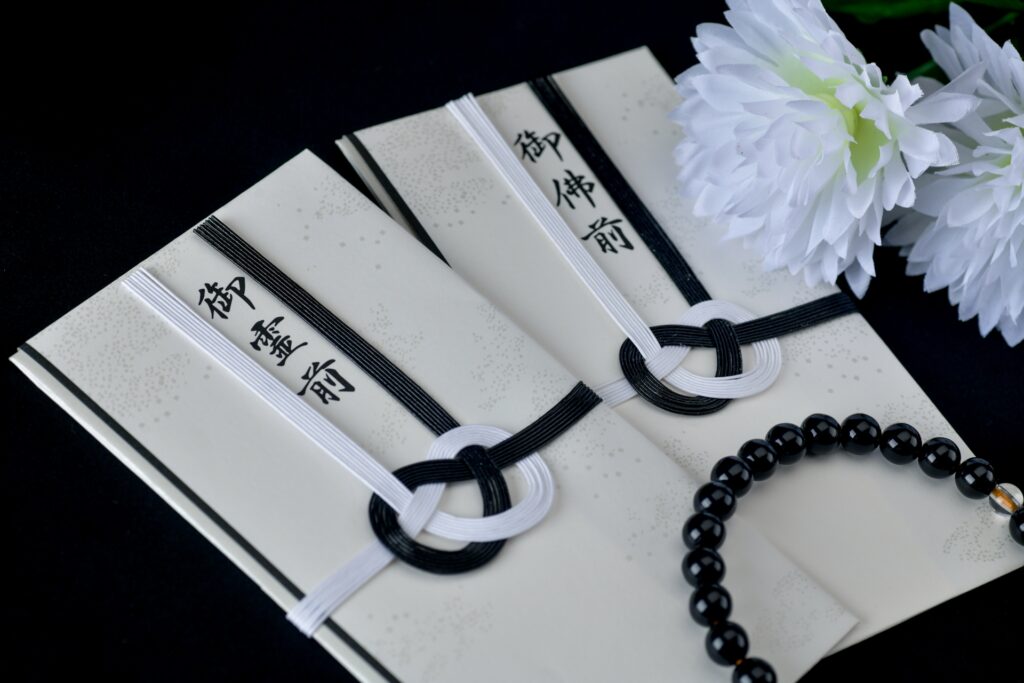
The words "Goreizen" and "Gobutsuzen" are often seen on the front of condolence envelopes, but although they may seem similar, they have different meanings, so it's important to use them correctly. Here we'll explain the meanings of each and how to use them correctly.
If you do not know the religious sect, select “Goreizan”
When attending a wake or funeral, if you are unsure of the recipient's religion or sect, it is common to choose a condolence envelope marked "Goreizen" (presenting the spirit of the deceased). "Goreizen" means offering to the "spirit" of the deceased, and is used in many Buddhist sects as well as some Shinto and Christian religions. Therefore, it is a suitable envelope to use when you are unsure which one to use, as it is not likely to be offensive to any religion or sect.
After the 49th day of Buddhist memorial service, it is called “Gobutsuzen”
In many Buddhist sects, the soul of the deceased is considered to be in a "spirit" state, wandering between this world and the next for 49 days. It is believed that the soul will become a "Buddha" at the memorial service on the 49th day. Based on this idea, the inscription on the condolence money envelope should be chosen according to the state of the deceased.
Specifically, it is considered good manners to use "Goreizan" at wakes, funerals, and memorial services before the 49th day memorial service, and to use "Gobutsuzen" at memorial services after the 49th day memorial service, such as the first and third anniversaries of death.
| period | Address | meaning |
|---|---|---|
| From the wake and funeral to before the 49th day memorial service | before the spirit | Offerings to the spirits of the deceased |
| The Dharma teachings of the 49th day onwards | In front of the Buddha (in front of the Buddha) | Offerings for the deceased who have become Buddhas |
Please note that in Jodo Shinshu, “Gobutsuzen” is the basis
Among Buddhist ceremonies, Jodo Shinshu sect requires special attention. Jodo Shinshu teaches the teaching of "Ojo Sokujobutsu," which means that the deceased will immediately attain Buddhahood in the Pure Land through the power of Amida Buddha. Therefore, it is believed that there is no period during which the deceased remains in this world as a "spirit."
Based on this teaching, in the Jodo Shinshu sect, the proper etiquette is to use "Gobutsuzen" instead of "Goreizen," which means "spirit," from the wake and funeral. If you know in advance that the sect is Jodo Shinshu, prepare a condolence envelope with "Gobutsuzen" written on it. Even if people of other sects mistakenly use "Goreizen," it is often not considered a breach of etiquette, so don't worry too much, just calmly prepare while taking care of your feelings.
The best tea gift for funerals is “Goen Tea from Kyoto Gyokuro”
What is Kyoto Gyokuro’s Goen Tea?
Kyoto Gyokuro's Goen Tea is a tea shop that delivers tea from Kyoto with the concept of "making tea more enjoyable." We aim to make high-quality tea more accessible to everyone, with content tailored to their needs.
We value the idea of "tea connecting people," and we offer a wide range of products that are perfect for everyday tea time, as well as gifts for special people and various novelties. We especially recommend our products that can be personalized with original designs or names !
Why not express your feelings of "May your wish come true" or "
May you find a good match" through tea?
Here are some recommended gifts that convey a message!
A special tea packed with feelings. Create a one-of-a-kind tea with an original greeting tea design. Custom order
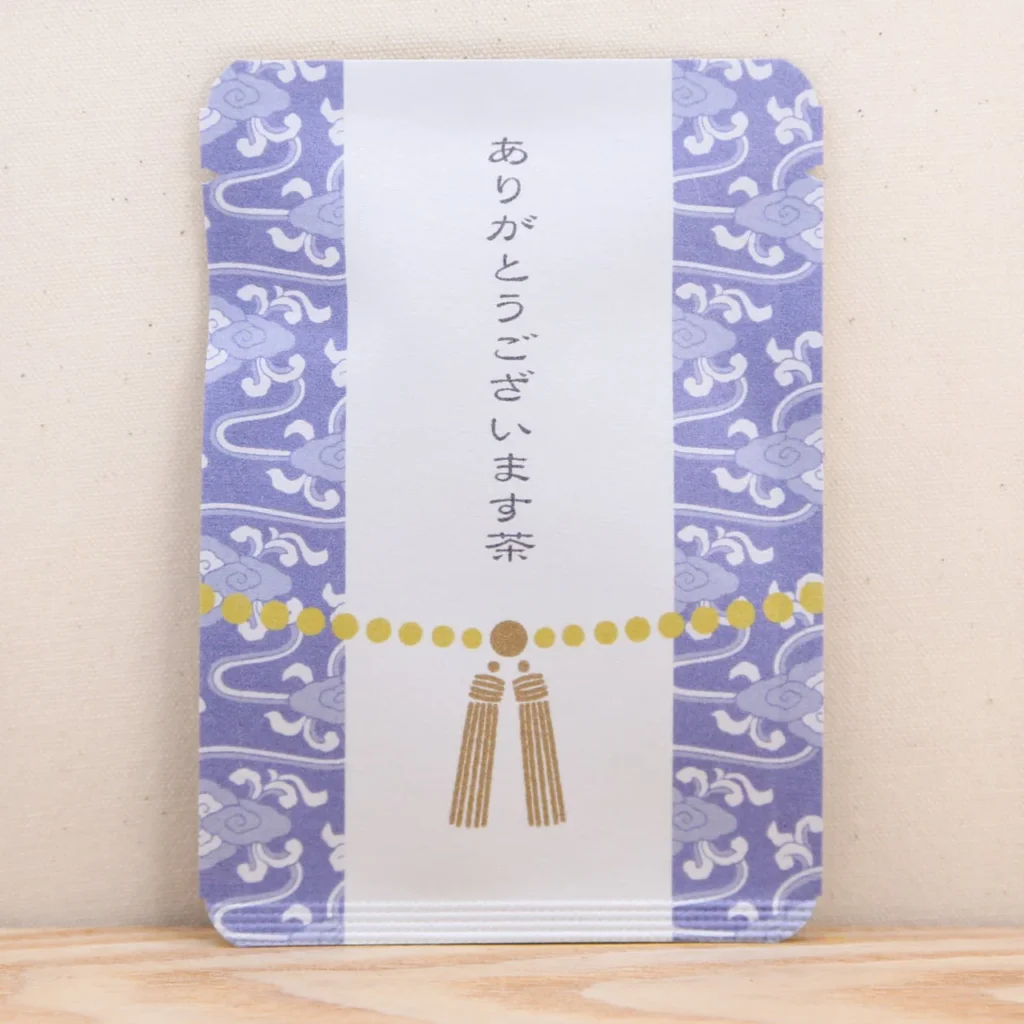
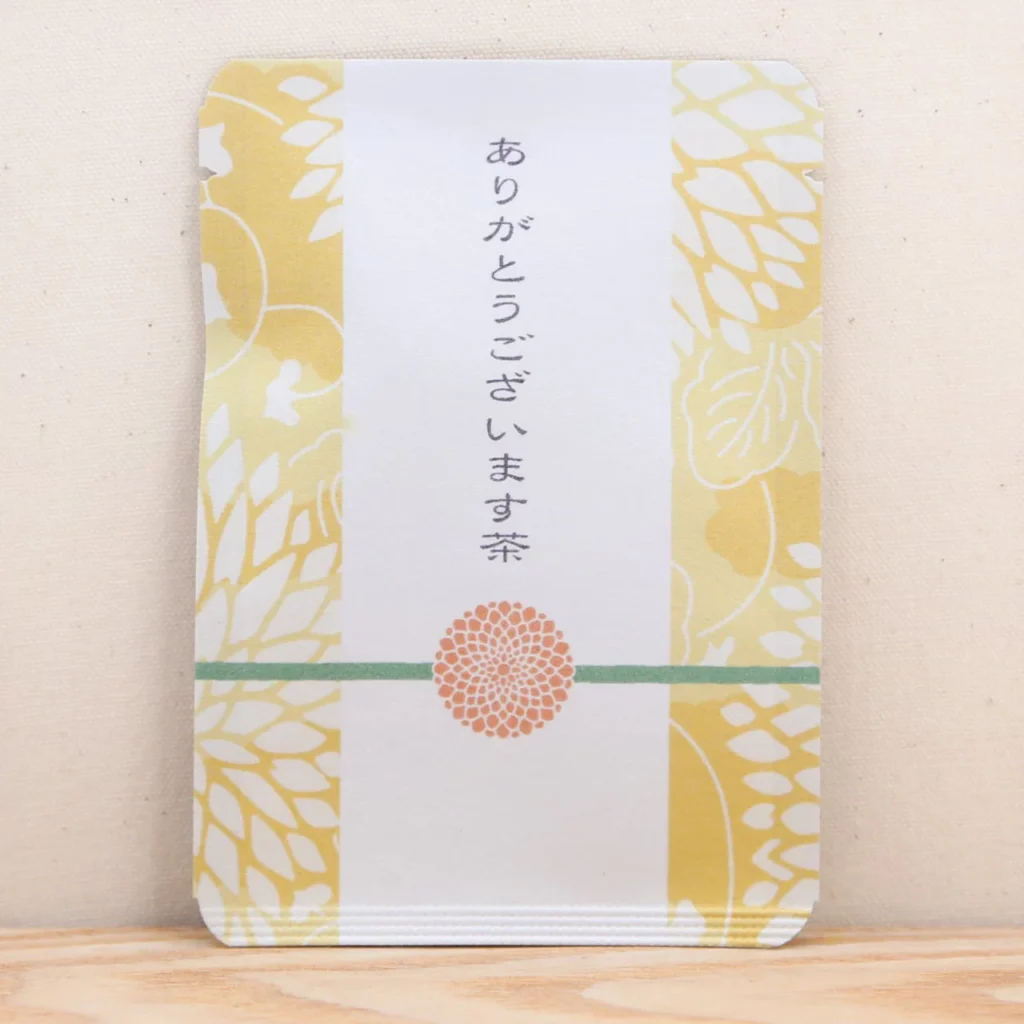
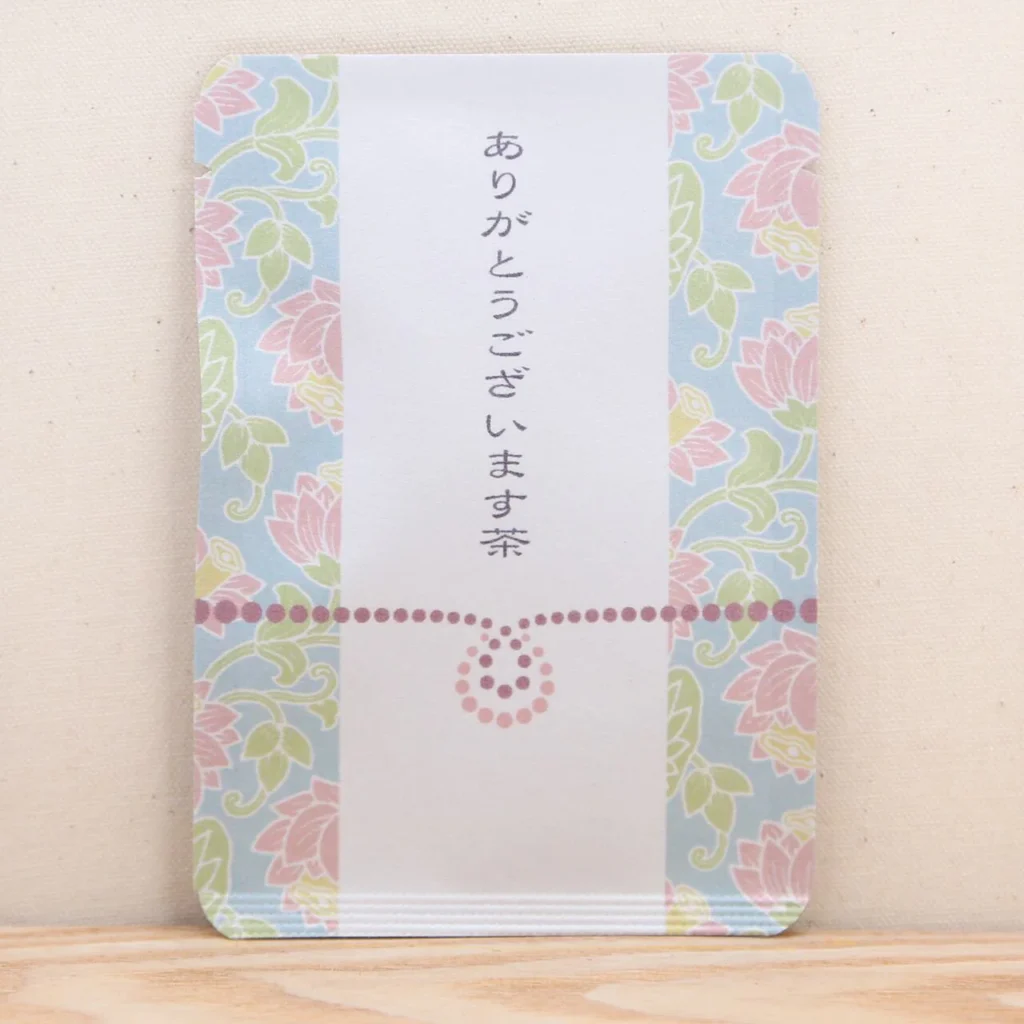
For someone who loves tea...you can include it as a gift in return for a condolence donation, or since it's the size of a business card, you can put it in an envelope and send it.
How to choose a condolence envelope for each religion
Condolence envelopes are used to express condolences, but the envelopes that should be used vary depending on the religion and sect. Choose an envelope that is in line with the etiquette of each religion so as not to appear rude to the deceased or their family. Here we will explain how to choose a condolence envelope for each religion.
Buddhist condolence envelope
Most funerals in Japan are Buddhist. For Buddhist ceremonies, you should choose a condolence envelope with a black and white or double silver "musubikiri" mizuhiki string. Designs with lotus flowers are reserved for Buddhist ceremonies. If you do not know the sect of the deceased, it is best to choose one that says "Gokoden" or "Gokoryo," which can be used by any sect.
| project | content |
|---|---|
| Address | Offerings before the deceased's spirit (before the 49th day), offerings before the Buddha (after the 49th day), condolence money, and incense offerings |
| Mizuhiki | Black and white or double silver knot |
| Bag design | Plain white or with a lotus flower pattern |
| Points to note | In Jodo Shinshu, it is believed that a person becomes a Buddha immediately after death, so "Gobutsuzen" is used from the wake and funeral. Please note that "Goryozen" is not used. |
Shinto-style condolence envelope
Shinto funerals are called "shinsosai." Condolence envelopes should be black and white or have double silver knotted mizuhiki cords, just like Buddhist ones, but avoid those with lotus flowers. Plain white envelopes are also fine.
| project | content |
|---|---|
| Address | Offerings of sacred offerings (Otamagushiryo), offerings of sacred branches (Osakakiryo), and offerings before the altar |
| Mizuhiki | Double white or double silver knot |
| Bag design | Plain white |
| Points to note | Do not use lotus flower designs that are reminiscent of Buddhist ceremonies. "Goreizan" can be used in Shinto ceremonies, but "Gobutsuzen" is a Buddhist term and should not be used. |
Christian-style condolence envelope
Although Christianity did not originally have the custom of giving condolence money, it is now common to follow Japanese customs and wrap money in a white envelope without mizuhiki, or prepare a special envelope with a cross or lily design.
| project | content |
|---|---|
| Address | Flower Fee (Ohanari-ryo), Flower Offering Fee (Kenkari-ryo) "Mass Fee" is only used by Catholics. |
| Mizuhiki | Generally not required |
| Bag design | Plain white or decorated with a cross or fleur-de-lis |
| Points to note | In Christianity, the inscription "Goreizan" can sometimes be used, but depending on the sect, this may be considered rude, so it is safer to write "Okaryo." |
How to choose a condolence envelope depending on the amount of money you are wrapping
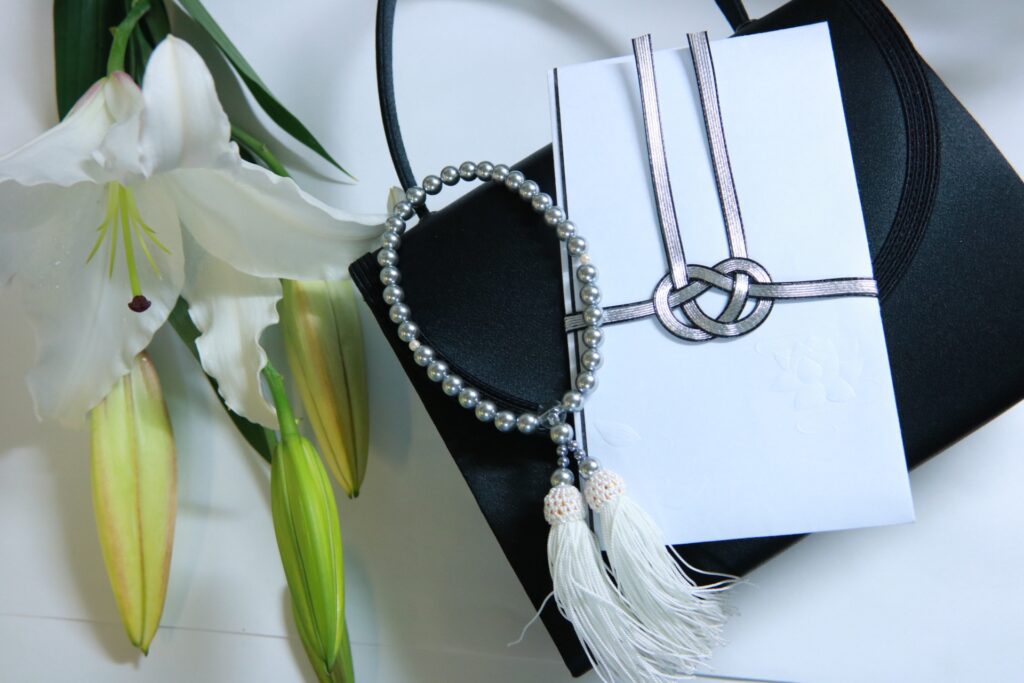
A condolence gift is a tangible expression of condolence for the deceased. When choosing a condolence envelope, it is important to consider the balance with the amount of money inside. If the envelope is too grand for the amount, it may make the recipient feel uncomfortable, while if it is too simple, it may be considered rude. Here, we will explain how to choose a condolence envelope that matches the amount of money you will be giving.
The table below provides guidelines for choosing a condolence envelope based on the amount of the gift.
| Estimated amount to wrap | Types of Mizuhiki | Characteristics of condolence envelopes |
|---|---|---|
| Up to about 5,000 yen | Printed Mizuhiki | This is a relatively simple type with no inner pouch. |
| Approximately 10,000 to 30,000 yen | Genuine black and white mizuhiki | A typical type of condolence envelope. |
| Over 50,000 yen | Genuine double silver Mizuhiki | A more formal type made using high-quality Japanese paper. |
Condolence envelopes with Mizuhiki printed on them for up to 5,000 yen
When giving condolence money to friends, coworkers, neighbors, etc., a good guideline is to give a condolence gift of around 3,000 to 5,000 yen. When wrapping this amount, it is best to choose a simple condolence envelope with mizuhiki printed directly on the envelope. Many of these envelopes are simple and do not have an inner envelope, so they are also a thoughtful gesture that will not make the recipient feel overly concerned.
If the amount is between 10,000 and 30,000 yen, use a black and white Mizuhiki envelope.
When wrapping around 10,000 to 30,000 yen to a relative or someone you are particularly close to, choose a condolence envelope that has actual black and white "musubikiri" mizuhiki tied around it, rather than a printed one. This type of condolence envelope is the most common and can be used in a variety of situations. It gives a more polite impression than one with printed mizuhiki.
For gifts over 50,000 yen, a condolence envelope with double silver Mizuhiki and high-quality Japanese paper will be used.
When wrapping a condolence gift worth 50,000 yen or more for a close relative or someone you've worked with, it's considered good manners to use an envelope that matches the amount. Choose a double silver (solid silver) Mizuhiki, which is considered higher quality than black and white. It's also appropriate to choose an envelope that looks elegant, such as one that's thicker than usual or made from high-quality washi paper.
How to write a condolence envelope correctly
There are important etiquette rules for writing condolence envelopes, which are used to remember the deceased and convey condolences to the bereaved family. Here we will explain how to write both the outer and inner envelopes.
How to write on the outer bag
On the outer envelope (top envelope), write the address and name. Be sure to write carefully so that it is clear who the condolence money is from.
Write the address in light ink
It is considered good manners to write condolence money brought to a wake or funeral using a brush with light ink. This is intended to express deep sadness, such as "The news of the death was so sudden that I didn't have time to grind the ink properly" or "The ink has become diluted with tears of grief." Nowadays, it is convenient to use a brush pen with light ink, which can be easily purchased at stationery stores and convenience stores.
In addition, for memorial services held after the 49th day, it is acceptable to write in dark ink.
How to write names (individual, joint names, company)
In the center below the mizuhiki, write your full name in slightly smaller letters than the front of the envelope. There are rules for how to write this when sending with multiple people or as a company.
| case | How to write your name |
|---|---|
| If you are submitting it as an individual | Write your name in the center. |
| When submitting as a married couple | Write the husband's name in the center and the wife's name (without the surname) to the left of it. |
| Up to three people can sign | From the center to the left, write the names of people in order of seniority. If there is no difference in rank, write them in alphabetical order. |
| Joint signatures of 4 or more people | Write the name of the representative in the center, and add "and everyone else" to the left of it. Place a separate sheet of paper with everyone's name, address, and the amount of money inside the inner envelope. |
| When issuing as a company | Write the name and title of the representative (e.g., CEO) in the center, and then write the company name in slightly smaller letters to the right of it. |
How to write on the inner envelope
On the inner envelope, write the amount of the gift, your address, and your name. This is important information that the bereaved family will need when arranging for a condolence gift later. If the condolence envelope does not have an inner envelope, write the information directly on the back of the outer envelope.
Write the amount vertically on the front
Write the amount of the gift in vertical writing in the center of the front of the inner envelope. To prevent tampering with the numbers, it is proper etiquette to use old-style Chinese numerals (large characters) with many strokes. The amount should begin with "金" (gold) and end with "圓" (yen).
| Amount (Arabic numerals) | Amount (standard Chinese numerals) | Amount (large) |
|---|---|---|
| 3,000 yen | 3,000 yen | Canqianyuan |
| 5,000 yen | 5,000 yen | Wu Qianyuan |
| 10,000 yen | 10,000 yen | Ichiman Yen |
| 30,000 yen | 30,000 yen | Sanwanyuan |
In some commercially available condolence envelopes, the column for writing the amount is printed horizontally. In that case, it is acceptable to write it in Arabic numerals.
Write your name and address on the back
On the left side of the back of the inner envelope, write the postal code, address, and name in vertical writing. Write clearly in block script so that the bereaved family can read it easily. If there are multiple people, write the addresses and names of everyone, or write the contact information of the representative, and enclose a separate sheet of information for everyone.
Things you need to know about putting money into a condolence envelope and etiquette
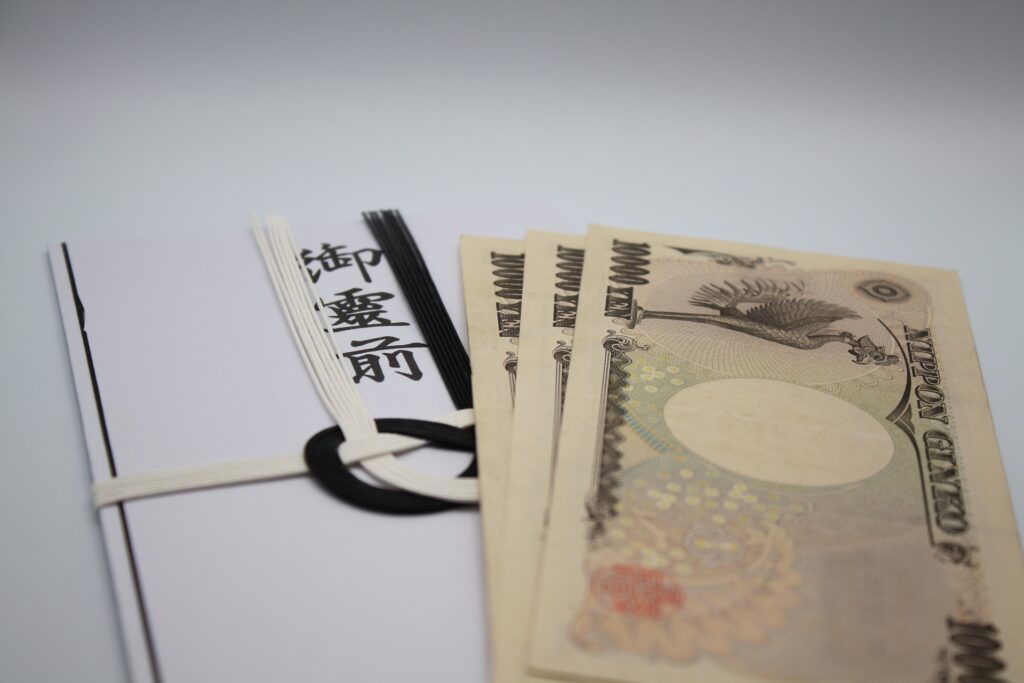
When wrapping money in a condolence envelope, there is a proper etiquette for expressing your feelings of remembrance for the deceased. We will explain the proper etiquette for wrapping money in a condolence envelope, such as the orientation of the bills and how to choose them, so that you don't panic in an emergency.
Pay attention to the direction of the bills when inserting them
When placing the bills in the inner envelope (or wrapping), be careful of the orientation. When expressing condolences, it is common to place the bills with the portrait side facing down, with the portrait facing downwards. This is said to represent the appearance of someone looking down in grief. If you are placing multiple bills, make sure they are all facing the same direction before placing them in the envelope.
The following table summarizes the key points for inserting bills.
| Points to check | How to insert bills |
|---|---|
| When viewed from the surface of the inner bag | Place the bill so that the back side (the side without the portrait) is visible. |
| The top and bottom orientation of the banknote | Place the portrait at the bottom of the bag. |
Fold the new bills once before inserting them.
It is considered good manners to avoid using new bills when wrapping condolence money, as new bills may give the impression that the money was prepared in advance.
If you only have new bills on hand, make a slight crease in the middle before wrapping them. A slight crease will help avoid the impression that you have prepared the bills. However, there is no need to go out of your way to find bills that are heavily wrinkled. Be careful, as bills that are too worn and dirty can be considered rude.
summary
In times of need, many people are unsure of which condolence envelope to choose. If you don't know the denomination, it's a good idea to remember to choose "Goreizen" first. It's also important to choose the right envelope based on the religion and the situation, such as the Buddhist ceremonies where "Gobutsuzen" is used after the 49th day. Choosing the right envelope based on the amount of money you're giving and writing in light ink are ways to remember the deceased and express your feelings of sympathy for the bereaved family. Please use this as a reference for properly conveying your warm condolences.