Hello! This is Goencha. When you put your offering in the offering box at a shrine or temple, have you ever wondered what meaning is contained within it? If you think about it again, it's quite interesting! We'll explain the original meaning of offerings and why we offer them, starting with their history. Offerings are an important gesture to convey gratitude and wishes to the gods, and the most important thing is to put your heart into them, rather than the amount. Learn the meaning of offerings and try to make your future visits to the shrine more heartfelt.


目次
What is Osaisen? Its basic meaning and role
When visiting a shrine or temple, many people naturally offer coins as an offering. You may be casually putting coins into the offering box, but this gesture has a deep meaning. We would like to unravel the basic meaning of offering coins and the important role they play in worship by looking at their history.
The history and origin of offerings
The roots of offering money go back to ancient Japanese beliefs. Originally, offerings to the gods were rice, vegetables, seafood, and other items grown in the area. People offered the precious things they had acquired in their daily lives to the gods to express their gratitude and convey their wishes.
As times changed and the monetary economy developed, these offerings were replaced by money. After the Kamakura period, "sen" (money) began to be circulated in general, and the word "saisen" (offering money) began to appear in documents during the Muromachi period. The kanji character "sai" means "to repay a favor from the gods" or "to pray," and it came to refer to the act of offering money to the gods as a token of gratitude or a wish.
Through this history, modern offerings have been passed down as an important custom that embodies respect for the gods and faith.
The meaning of offerings to the gods
Offerings are a modern form of ancient "offerings." We offer money to gods and Buddhas in the form of offerings to express our gratitude and to convey our wishes.
It is believed that the "heart" that is put into this gesture is important. The offering is like a bridge of the heart that connects us to the gods! It has an important meaning, as it is said that through offerings we deepen our relationship with the gods and hope that they will lead us in a better direction.
The role of offerings in purifying impurities
Offerings have another important role to play. That role is to purify the soul. Shrines and temples are sacred places, and it is considered important to purify our mind and body before worshiping there.
The act of offering money as an offering is also thought to purify one's own mind of evil thoughts and the impurities accumulated in daily life, preparing one to face the gods and Buddhas with a pure mind. Money has long been treated as something pure and has exchange value. Offering money is imbued with the meaning of purification, resetting our own mind and body and making it easier for prayers at sacred places to be heard.
A perfect New Year’s greeting! A great tea gift is “Kyoto Gyokuro’s Goen Tea”
What is Kyoto Gyokuro’s Goen Tea?
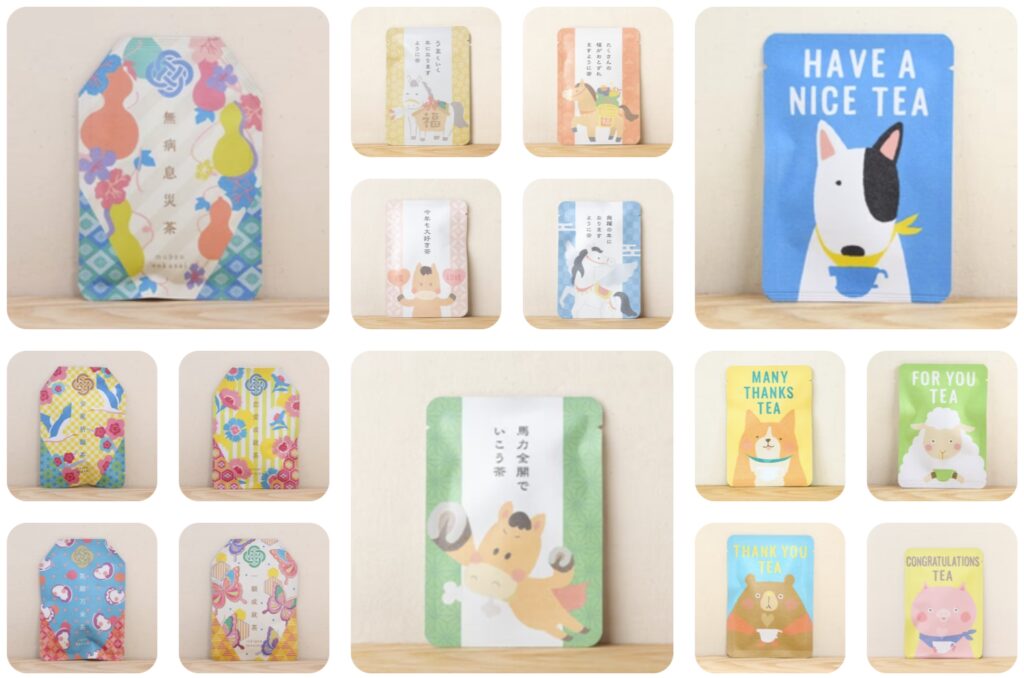
Kyoto Gyokuro's Goen Tea is a tea shop that delivers tea from Kyoto with the concept of "making tea more enjoyable." We aim to make high-quality tea more accessible to everyone, with content tailored to their needs.
We value the idea of "tea connecting people," and we offer a wide range of products that are perfect for everyday tea time, as well as gifts for special people and various novelties. We especially recommend our products that can be personalized with original designs or names !
Why not express your feelings of "May your wish come true" or "
May you find a good match" through tea?
Here are some recommended gifts that convey a message!
A special tea packed with feelings. Create a one-of-a-kind tea with an original greeting tea design. Custom order


Wishes and gratitude contained in offerings
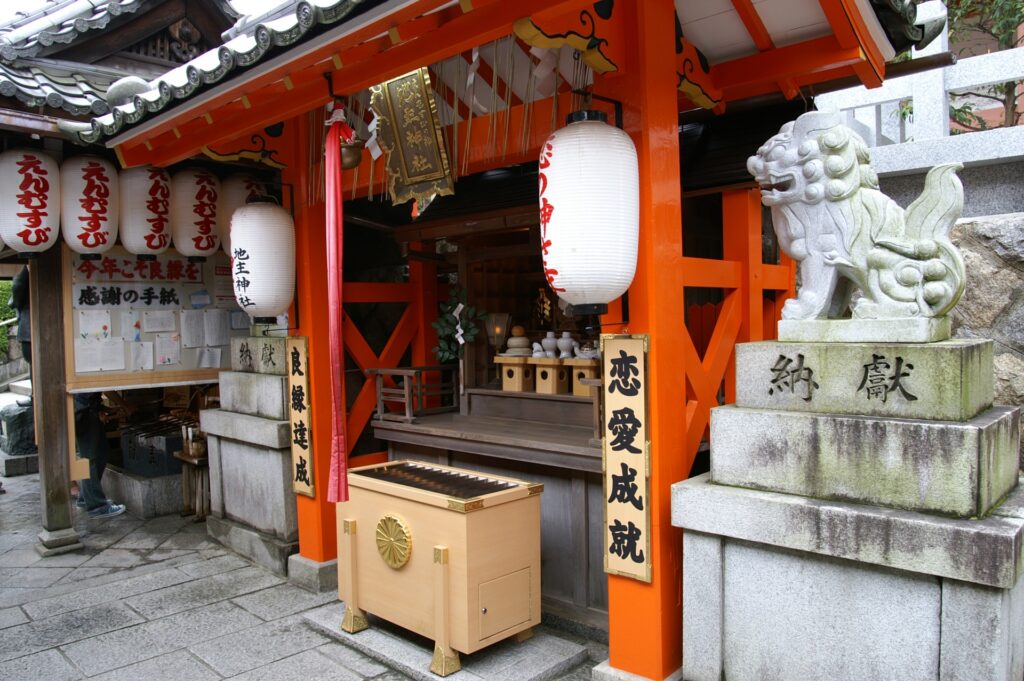
Offering money to a shrine is not just an act of offering money. It also contains many of our thoughts and feelings. Here, we will explain the wishes and feelings of gratitude that can be entrusted to offering money, as well as the meaning of deepening one's connection with gods and Buddha.
Offerings to grant wishes
When we visit a shrine or temple, we have many wishes in our hearts. Offerings are an important way to convey those wishes to the gods and Buddhas.
For example, you can offer your offering while imagining a specific wish in your mind, such as health for your family, success at work, academic achievement, etc. The act of offering your offering itself makes you more conscious of your wish and becomes an opportunity to talk to the gods or Buddha.
This spirit of offering is deeply connected to the history of people offering prayers at sacred places since ancient times. Rather than simply offering money, it is important to recite a wish in your heart and pray for that wish to come true.
Offering money to express your gratitude
Offering money to a shrine is not just for making wishes come true, it is
also a way to quietly convey to the gods the small joys we feel in our daily lives and our gratitude for the many blessings we have received.
A day spent peacefully without incident, an encounter with a special person who remains in one's heart, being able to live each day with energy... For each of these things that seem ordinary but are by no means ordinary, we put our hearts of gratitude into the offering and put our hands together.
Also, when your wish is granted, it's a good idea to make a visit to express your gratitude. By offering a coin as an offering once again, you can express your gratitude, which cannot be seen with the eyes, and cherish your connection with the gods.
The act of forming a relationship with God
Offering money as an offering is an important gesture that creates a bond between us and the gods and Buddhas.
"Goen" means a deep connection or chance encounter. By offering money as an offering, we become aware of our relationship with a sacred being and deepen that connection. This is not just about asking for something one-sidedly, but about building a heart-to-heart exchange!
In particular, at Japanese shrines and temples, there is a deeply rooted culture of valuing connections with gods and Buddhas through offerings. Many people feel that by making an offering, their bond with the place and the sacred beings that reside there becomes even stronger.
In this way, offering money as an offering is a heartwarming gesture that conveys wishes, conveys gratitude, and fosters a connection with gods and Buddhas.
Is there any significance to the amount of money offered at the shrine? The correct way to put money in the shrine offering
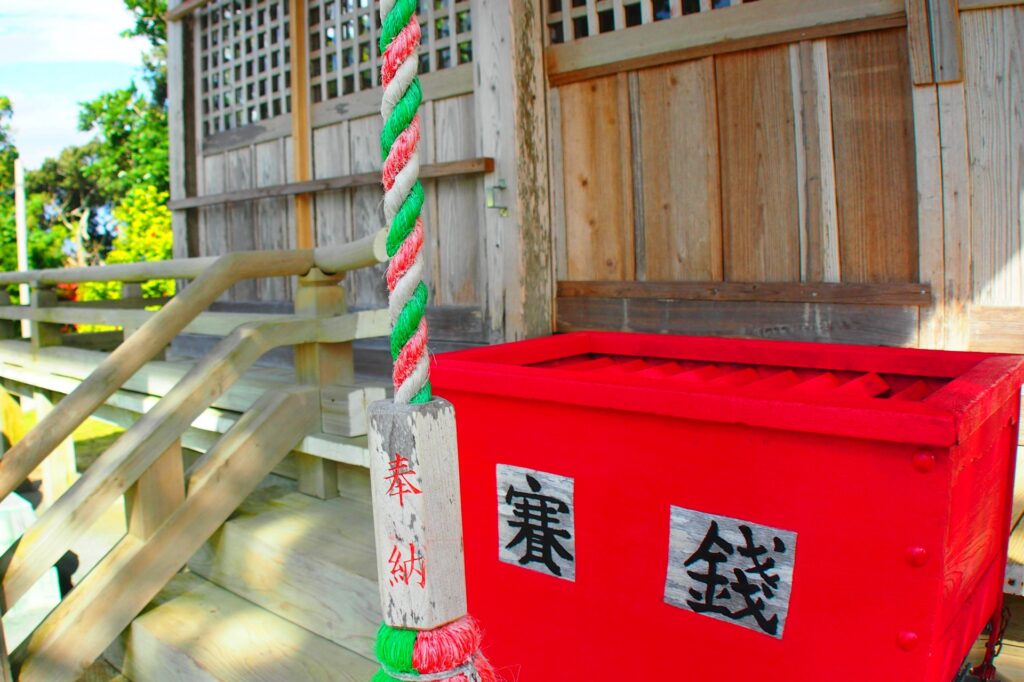
Did you know that there are many different theories and misconceptions about the amount of offering money? Here, we will explain the original thinking behind the amount of offering money and the correct etiquette for praying with sincerity.
Misconceptions and the true meaning of the amount
You may have heard people say things like, "Five yen is a good amount to offer" or "10 yen should be avoided." This is a popular myth that originated from the puns associated with certain amounts.
For example, the 5 yen coin is sometimes chosen with the hope of a good connection with the gods, as it is associated with "goen (five yen)." However, this meaning was added later, and the amount itself does not seem to have any special meaning in Shinto. Originally, the most important thing about offerings is not the amount, but the "feelings" of offering gratitude and prayers to the gods with a pure heart.
However, knowing the mnemonics can help you express the feelings you put into your offering. Here are some examples!
| Amount | Examples of mnemonics | Examples of wishes that can be included |
|---|---|---|
| 5 yen | I hope we can meet | Good relationship, good luck |
| 10 yen | Distant relative | (Even when it is considered to be something that should be avoided) |
| 11 yen | Good connections | Good relationship, good luck |
| 25 yen | Double fate | An even better relationship |
| 45 yen | A connection from start to finish | Always a good relationship |
| 50 yen | The 50 yen coin has a hole in it, so it's easy to see through. | Better future prospects, good fortune |
| 100 yen | There is no hole in the 100 yen coin, so "there is no more loss" | Financial luck, good health |
| 500 yen | "It doesn't get any better" because there are no bigger coins. | Best of luck |
These mnemonics are for reference only! If the offering is made with sincerity from the person offering, the offering itself is precious. Don't get too caught up in the amount, and don't forget to show respect and gratitude to the gods.
The best offering is one that is made with sincerity
Offerings are gifts to the gods and represent our sincerity. In Shinto, the value of an offering lies not in the amount of money, but in the purity of the heart of the person offering it.
For example, offering a portion of your daily income to the gods with gratitude. This does not mean that you should forcibly give a large amount of money. Even if it is a small amount, if you offer it with all your heart, the offering will reach the gods and play an important role in conveying the worshipper's wishes and feelings of gratitude.
What's important is not to feel that "I can only give this much," but to have a pure heart that "I want to convey these feelings to the gods." The moment you put your offering in the offering box, silently chanting your gratitude and prayers to the gods in your heart will deepen your worship.
Proper offering etiquette when worshipping at a shrine
There are also several etiquette rules for offering money to a shrine. These rules are intended to show respect to the gods and to prepare the worshipper's mind.
First, you should purify your body and mind at the temizuya (purification fountain) before offering your offering. When you reach the offering box, gently place your offering. There is no need to throw it in roughly or make any noise. Placing it quietly and carefully conveys respect for the gods.
After offering your offering, if there is a bell, pull the bell rope to ring it. Next, you make your prayers by bowing twice, clapping twice, and bowing once more. The clear sound of the bell beckons the gods and acts as a signal to purify the worshippers' minds and bodies. The "o" in "suzuo" (bell rope) means "to connect," and it also serves to connect the gods and worshippers. In this series of steps, the offering is the first offering to the gods, and it plays a role in conveying our feelings. Make sure to perform each step carefully and with all your heart.
Understand the meaning of offerings for a better worship experience
Offering money is not just an act of offering money. Understanding its deeper meaning will make your daily visits to the shrine more fulfilling.
Offerings are not donations
Offerings are given to shrines and temples to express gratitude to the gods and Buddhas, and to express one's own wishes.
Of course, they are also used to maintain shrines and temples, but their true essence lies in the important act of connecting us with the gods and Buddhas. The heart that goes into the act is valued more than the monetary value.
The benefits of putting your heart into it
The benefits of offering money are not determined by the amount. What's important is the attitude you have when you offer money. It is believed that by expressing gratitude from your heart and conveying your wish sincerely, you will deepen your connection with the gods and Buddhas, and receive even greater benefits.
The benefits do not only refer to material wealth, but also include various intangible blessings such as peace of mind, awareness in daily life, the strength to overcome difficulties, and meeting good people.
It is said that it is good to pray with the belief that your sincere feelings will surely reach the gods and Buddhas and they will respond in the best possible way.
summary
Offering money is not simply the act of putting money into the offering box. Since ancient times, it has had the meaning of offering to the gods and purification, and is an important way to convey requests and gratitude. Rather than the amount, what's most important is to offer money with sincerity! This feeling will deepen your connection with the gods and make your visit to the shrine more fulfilling. Learn the meaning behind the offering box and visit with a refreshed mind. May 2026 be a better year for everyone!